
Grown outdoors in full sun, and ripened on the vine, tomatoes develop complex sugars and acids that give them their unmatched depth of taste. Unlike those bred for shelf life and transport, home garden varieties are more about flavour. Growing our own reconnects us to the seasons, to patience, and the simple magic of watching something grow.
One of the best things about growing tomatoes is that there is no single right way to do it. Experiment, adapt, and chat to other growers to find what works for you. From small sunny balcony to large country garden, tomato growing can be tailored to suit any space and any lifestyle.
There are, of course, a few ‘non-negotiables’. Good drainage is critical, and tomatoes won’t thrive without plenty sun and warmth. Wait until the soil has warmed and nighttime temperatures consistently stay above 10°C before you plant tomatoes outdoors. If the site is poorly drained, plant above the ground in raised garden beds or containers. Tomatoes also need feeding and watering - but maybe not as much as you think.
With the right balance of drainage, watering and feeding, tomatoes thrive in containers filled with good quality potting mix. But when space allows, the holy grail for any food crop is healthy living soil.
Nurture the soil by keeping it covered, ideally with plants. Living roots support the invisible micro-organisms that return the favour by nurturing our crops. Use herbs or quick growing lettuces to fill gaps around young tomato plants. Even weeds are better than bare soil! Where possible, after harvesting the top parts, it’s worth leaving crop roots in the ground to break down naturally. Plant new seedlings in the gaps.
Tomatoes originate from warm dry South American climates. Modern varieties, however, have adapted to a range of growing conditions.
Consistent summer watering is essential, especially during dry periods and when plants are fruiting. Prolonged drought or erratic watering can stress the plants, leading to reduced yields, blossom drop, or cracked fruit.
On the other hand, over-watering can also cause issues. Unless your tomatoes are growing in pots, a thorough soaking once or twice a week is all that’s needed. Frequent, shallow watering leads to weak root systems. Water deeply to encourage deep root growth, which will help plants access moisture deeper in the soil during hot weather.
To reduce disease risk, avoiding wetting the foliage, and try to water early in the day to allow time for any moisture on the leaves to dry. Fungal infections, like blight or powdery mildew, thrive when leaves stay wet for extended periods.
High yielding plants like tomatoes need lots of nutrients to support their huge volumes of fruit. Start feeding, little and often, once the tiny fruits appear. An easy way to be sure of the best balance of nutrients, is to use a fertiliser designed for fruiting plants with optimal potassium levels. Use a weak solution every one or two weeks. Sheep pellets applied at planting time and liquid fish fertilisers applied regularly during fruit formation also give good results. Some gardeners bury fish carcasses below their tomatoes. A home brew of comfrey leaves is high in potassium, but care is needed not to make it too concentrated. Seaweed enhances nutrient uptake and encourages strong healthy root growth.
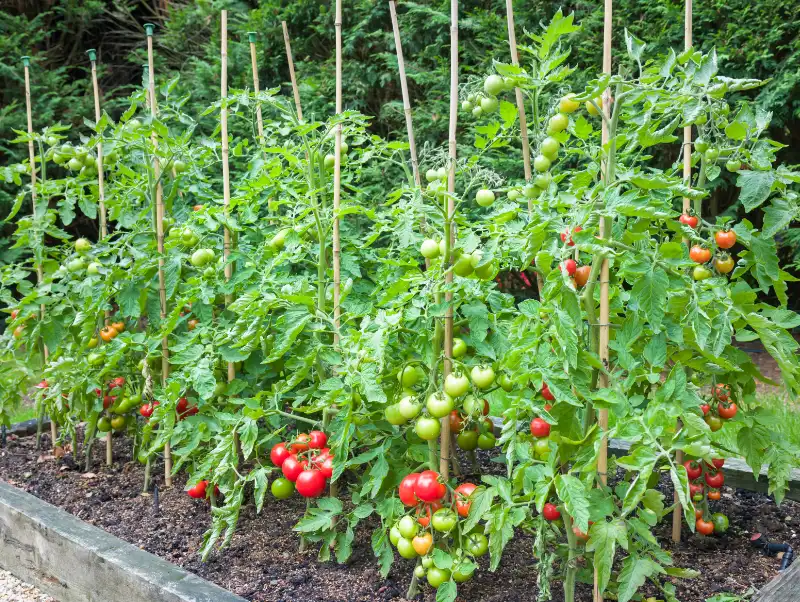
Most tomatoes are tall growing vines. Without support, the plants will sprawl on the ground, but this leads to damaged fruit, increased risk of disease, and tricky harvesting. Keeping plants upright improves airflow, reduces the chance of rot, and makes them easier to care for and harvest.
Install supports before planting to avoid damaging the roots later. Stakes are simple and space-efficient. They are inexpensive and easy to install, but they do require regular tying and may not offer enough stability for the heaviest fruiting plants. Tomato cages work well for lower growing varieties, providing all-around support and are low maintenance once in place, but may tip over under the weight of a mature plant. Trellises can take more time to set up but they are ideal for growing tomatoes vertically, and allow excellent airflow and sun exposure, helping to reduce disease.
Removing the little side shoots (called laterals) that appear between each leaf and the main stem helps to keep the plant growing in the right direction and prevents overcrowding. Do this every few days when the weather is fine, lightly tying new growth with flexible ties. Towards the end of the season, removing the growing tips diverts energy into the ripening fruit.
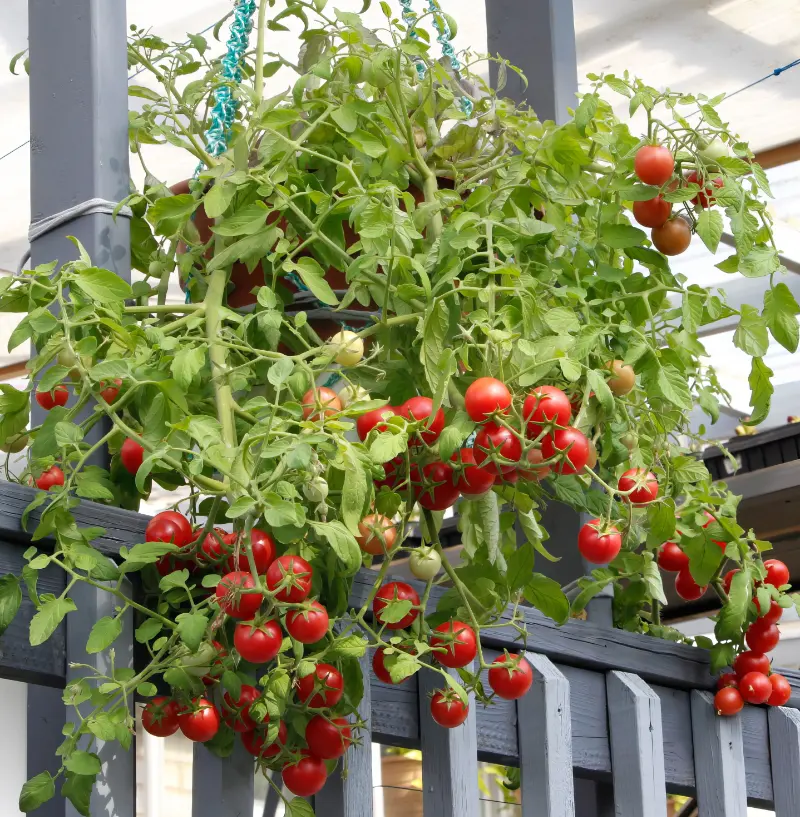
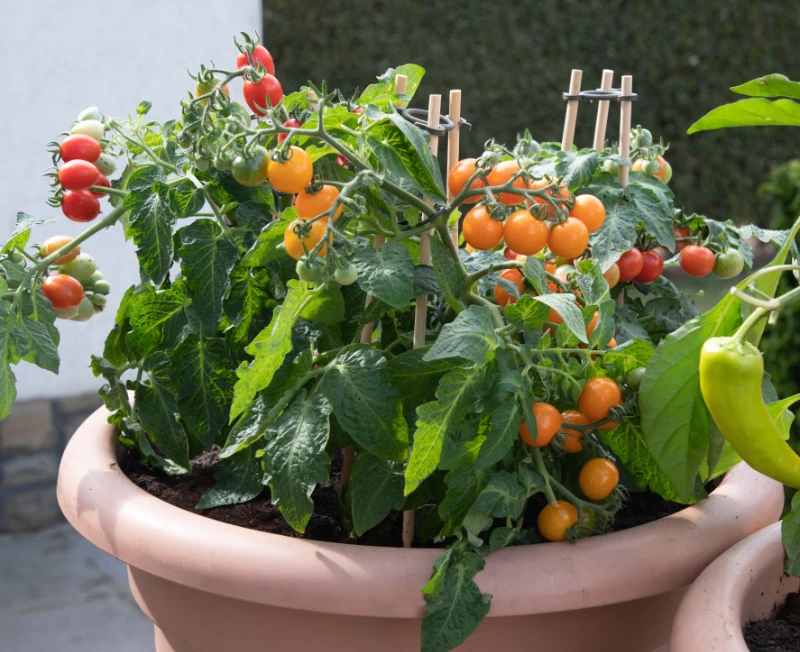
Growing tomatoes in containers is ideal if you're short on space or want to have the flexibility to move plants around. Shorter growing and dwarf ‘patio’ varieties are ideal for pots.
Choose a large container, at least 40 cm wide and deep, with good drainage holes. Tomatoes have deep root systems, so the more room they have, the better. Place your container in the sunniest spot available. Fill it with a high-quality, potting mix with good moisture retention. All except the most compact patio varieties will need the support of a stake, tomato cage or trellis.
Consistent watering and feeding is especially critical when growing tomatoes in pots. Containers can dry out quickly in warm weather so daily watering is needed during hot dry spells.
Feeding ‘little and often’ is important as nutrients can leach from the potting mix with watering. Start with a slow-release fertiliser at planting time. Once the plant begins to flower, switch to a high-potassium liquid tomato fertiliser and apply it (no stronger than directed on the pack) every week. This will encourage strong fruit development and helps avoid problems like blossom end rot.
TIP: When planting your tomato seedling, bury it deeper than it was in its nursery pot, covering part of the stem. This encourages the plant to grow extra roots along the buried stem, leading to a stronger, more resilient plant.
Experiment with different tomato varieties to find the best fit for your specific growing conditions and what you like to eat. Different varieties offer unique benefits, from early harvests and disease resistance to specific flavours and sizes.
Some tomatoes are more tolerant to heat or cold, while others thrive in containers. Varieties like cherry tomatoes can be ideal for quick,space-efficient crops, while beefsteak tomatoes are perfect for larger harvests and slicing. Some varieties mature earlier or later than others.
There are two main types of tomato plant; determinate and indeterminate. Most varieties are indeterminate; they will keep growing, flowering and fruiting until stopped by frost. These mainly taller types need support structures for best results. Compact bush tomatoes that quickly grow to a finished height then produce a bumper crop all at once are known as determinate varieties. These mainly early bearers are ideal for cooler regions with shorter summers and can be grown without staking or pruning.
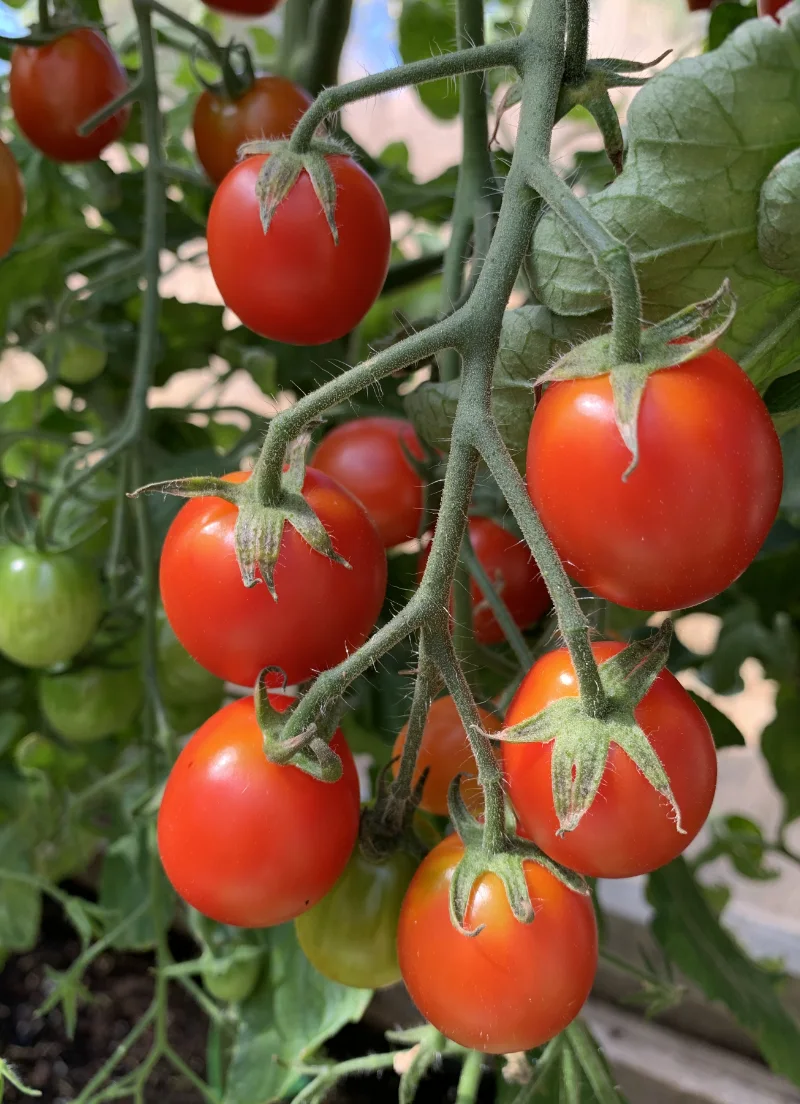
Bite-sized with a burst of sweetness when eaten, cherry tomatoes are prolific, easy to grow and the ultimate snack tomato for lunch boxes, salads and platters. Favourite ‘Sweet 100’ is available as a seedling or grafted plant is very easy to grow for a vast abundance of sweet, cherry sized juicy fruit on long trusses.
Cocktail tomatoes like ‘Tumbling Tom’ and ’Campari’ are a little larger than a cherry tomato, with attractive fruit produced in trusses.
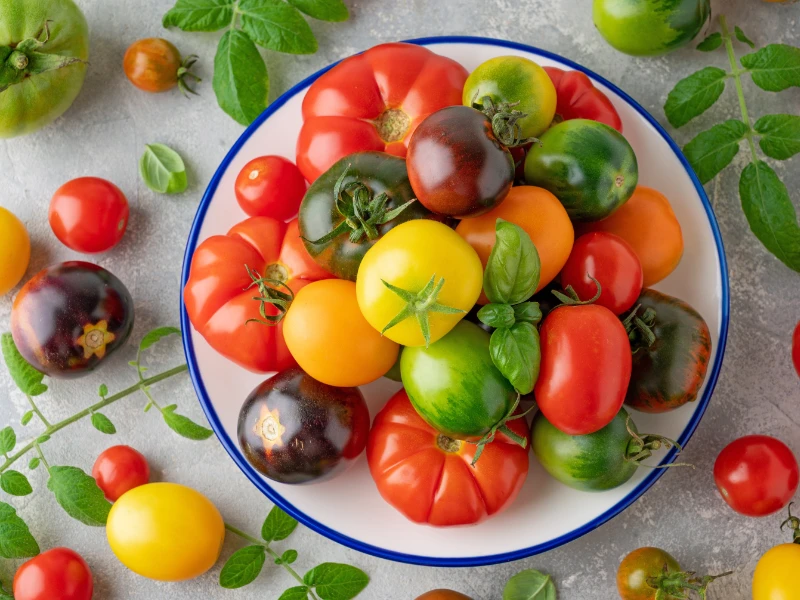
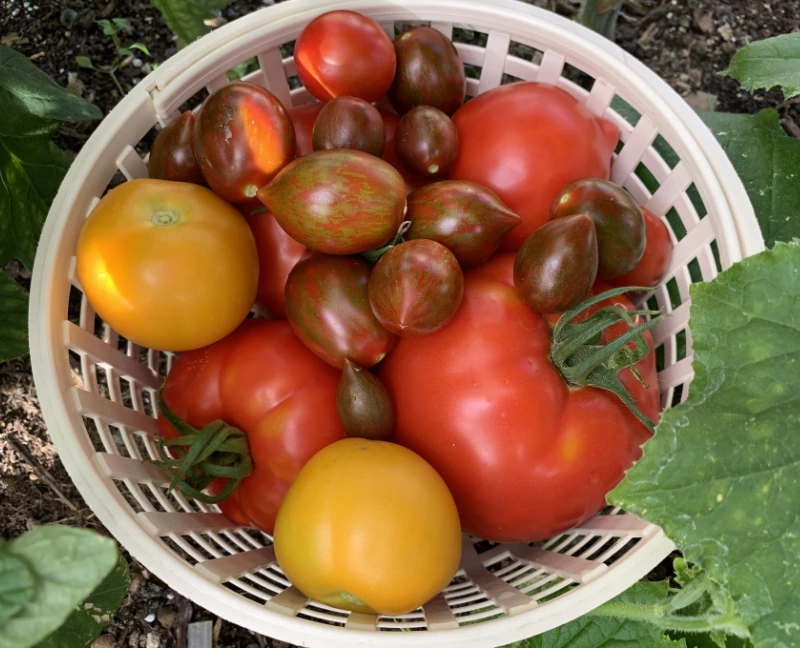
Heirloom tomatoes are those that have been passed down through generations. These tasty treasures come in an enticing array of interesting colours and shapes. ‘Black Krim’ has large sweet fruit with dark skin and flesh. ‘Brandywine Pink’ is a beautiful ‘beefsteak’ tomato dating back to 1885. Old favourite Grosse Lisse produces loads of large tasty fruit.
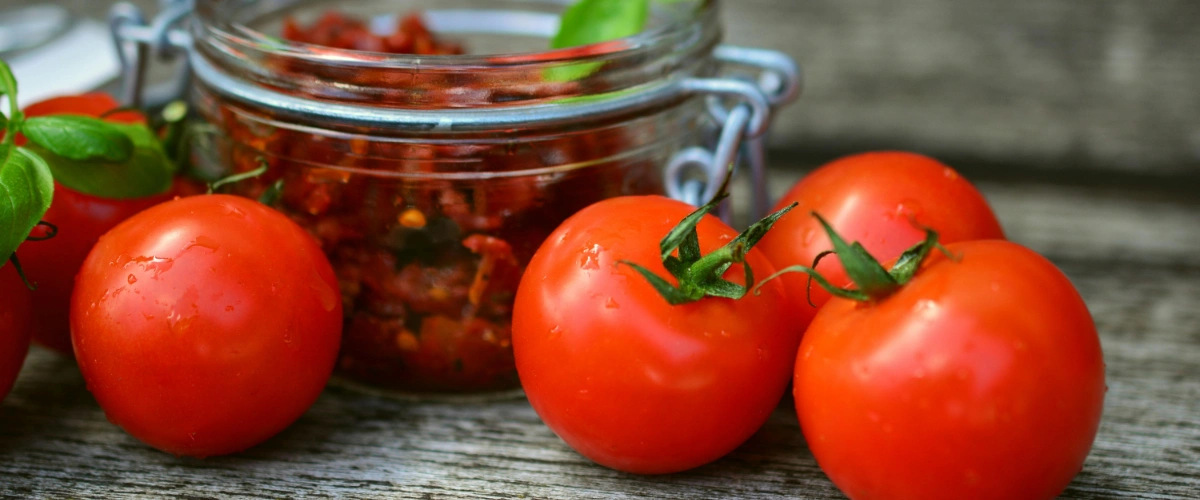
Low acid ‘Roma’, a popular Italian tomato, produces a bulk crop of oval tomatoes that are excellent for cooking, bottling and sauce making.
Super-sized Beefsteak, Big Beef and enormous Super Steakhouse impress with their generous proportions, quirky shapes and overall deliciousness. One slice covers a slice of toast.
Tasty medium sized modern hybrid tomatoes with super high yields and disease resistance, include ‘Tasty Tom’ and ‘Dynamo’.
Summertime is party time for pesky pests and blights. Keeping tomato bugs at bay takes a multi-pronged approach. Start with the basics.
A healthy plant in healthy soil has the best chance of fighting off attacks from pests and pathogens. Beneficial soil microorganisms can play a key role in protecting our crops from pests and diseases. If possible, avoid planting tomatoes and their relatives (potatoes, capsicum, chillies, eggplants) in the same place year after year. The longer a garden bed has a rest from any one plant family, the better. If it’s too hard to change the planting place, consider changing the soil or planting tomatoes in containers.
Trial different tomato varieties . Many have good disease resistance, but working out which grow best in your location is a matter of trial and error. Talk to friends and neighbours. Early ripening varieties can provide a good crop before pests and diseases take hold.
Water deeply not daily to foster deep root growth. Avoid wetting the leaves as pests and diseases thrive in damp warm conditions. Tie plants to their supports to allow plenty of air movement around the leaves.
Choose a dry day to prune or remove leaves showing signs of disease. Disease spores are moved from one plant to another via tools and fingers especially when conditions are wet.
Protect nature. Tiny native wasps and other beneficial insects prey on tomato pests. Any spray that targets pests and diseases also has the potential to harm beneficial insects and soil organisms. Marigolds, lavender, and also the flowers of herbs like fennel, rosemary and dill, will attract these helpers to your garden.
Mesh crop cover fabric helps prevent insect pests laying their eggs on crops. The fabric weave must be small enough to block tiny psyllids, and be sealed around the edges to be effective. On the downside, insect mesh can increase humidity and reduce light. A tall frame is needed for tall growing plants.
Keep watch and act early. To be effective, sprays need to be applied early before pest and disease populations get out of hand. Use registered products as directed. Mavrik is safe for beneficial insects once it has dried on the plant. Naturally occuring neem tree oil has been shown to be effective against psyllids when used correctly. Copper helps control against fungus diseases and is an accepted organic spray option, although its overuse can harm soil life.