Long, hot El Niño summers seem to be more frequent and stronger. When seeking the shade on those thirty degree days, we should be thankful to those who planted trees long ago, in many cases before we were born.
We kiwis are pretty good at planting trees, and we're getting better. Forward-thinking farmers and other good sorts are doing remarkable work planting trees to protect our soils and waterways. Others work tirelessly to protect and regenerate native bush environments.
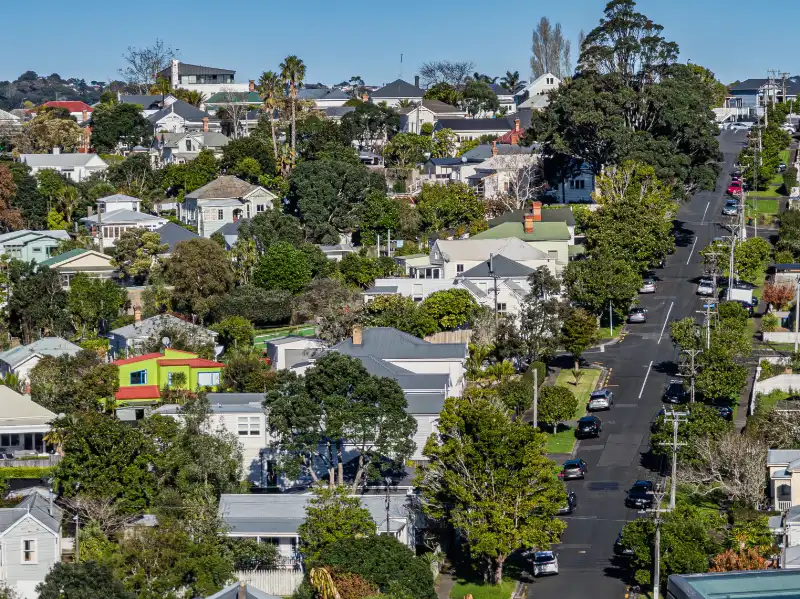
Just as important as our rural green spaces are our ‘urban forests’ where most of us actually live. Worldwide, the critical importance of green life to people who live in cities is increasingly recognised.
Associate Professor Justin Morgenroth from The University of Canterbury leads the New Zealand Urban Forest Initiative. He says trees are our green infrastructure which, unlike grey infrastructure, provide more benefits the older they get and, “Cities that have undertaken cost benefit analyses of urban trees have found that for every $1 spent on urban trees those trees return between $1.35 and $6.69 worth of benefits.”
But our largest and most valuable trees continue to be lost, experts say, at a worrying rate. The urban forest includes all of a city’s vegetation, on both public and private land, but a significant proportion of our cities’ largest and most valuable trees are in private gardens. At last count, 61% of Auckland’s urban forest was on private land. Christchurch’s trees face increasing pressure from the development needed to meet a growing population. Local news stories often illustrate how easy it can be to legally cut down mature trees on private land when compromises could have been made. Howell Davies, arborist and Principal Advisor Urban Ngāhere at Auckland Council, says New Zealand’s local authorities have very limited legislative power, compared to other countries, to prevent valuable trees being removed from privately owned property.
“Nationally we have a climate emergency but locally we are unable to employ rules to protect and preserve trees that help us to mitigate and ameliorate climate change.” - Howell Davies.
New technologies are improving the ability for urban tree canopies to be measured. Auckland’s canopy has been measured at 18.4%. Hilly Wellington boasts a relatively healthy 30% cover. Christchurch measured its tree canopy in 2015-2016 at 15.6%. By 2018-19 it had reduced to 13.6%.
Statistics also shed light on the fact that the suburbs with the most urgent need for more trees are where our most disadvantaged communities live. Justin Morgenroth says urban forest inequity is a common phenomenon in NZ and abroad.
In light of these worrying trends Auckland City Council produced its ‘Urban Ngāhere (Forest) Strategy’ in 2019. Christchurch has followed with ‘Our Urban Forest Plan for Ōtautahi Christchurch’. Both are available online and make interesting reading.
There will always be a need to plant more trees, but are we paying enough attention to the grand old trees we already have? They contribute hugely to the beauty and vitality of our neighbourhoods, and even an ugly tree has benefits.
12 reasons to keep that tree
- Carbon capture.
Through the natural process of photosynthesis, trees soak up carbon dioxide, locking it away for centuries in their wood, roots, leaves, and surrounding soil. The work trees do to remove one of the most damaging greenhouse gases from the atmosphere cannot be underestimated. - Trees improve the air we breathe.
Trees not only convert carbon dioxide into pure oxygen, they also filter out harmful dust particles and trap pollutants from vehicles. - Stormwater runoff reduction.
Like giant umbrellas, trees absorb rain, reducing the impact on the ground during storms. Their canopies and their roots can significantly reduce flooding and slow water flow, allowing stormwater and wastewater systems to do their job during a deluge. - Beating the heat.
The urban ‘heat island’ effect occurs where a proliferation of roads and concrete results in a city that is significantly hotter. Trees offset the heat island effect by providing shade on a hot day and also by cooling the air via transpiration. When the water they draw up from the earth evaporates through the pores on the undersides of their leaves, that water vapour cools the air. - Trees help save energy.
Strategically planted trees can reduce the need for energy hungry air conditioning systems in homes and workplaces. Trees can also keep us warmer in winter by providing shelter from cold winds. Deciduous trees give shade in summer but let the warm sun through in winter. - Trees are essential for human well being.
The urban ‘heat island’ effect occurs where a proliferation of roads and concrete results in a city that is significantly hotter. Trees offset the heat island effect by providing shade on a hot day and also by cooling the air via transpiration. Justin Morgenroth says, “Studies have conclusively shown that trees cool local air and land surface temperatures, in some cases by tens of degrees!” - Trees support wildlife.
Loss of trees means a corresponding loss of variety in the countless plants, animals and microorganisms that depend on trees for food and shelter. Trees protect and feed the soil life with their roots and their leaf litter. Preventing biodiversity loss is critical if we are to save the complex food chains that are essential to life. - Trees enhance property values.
Research findings worldwide support the idea that trees and greenery help properties sell faster, and at higher values. The Arbor Day Foundation has published research showing that mature trees can add 10% to 20% to a property's value. Additionally, they found that homes in neighbourhoods with mature trees tend to have higher values. Tree canopy measurements in New Zealand cities has confirmed that our wealthiest suburbs are also our leafiest. - Trees build positive communities.
Planting projects that encourage community involvement are accessible to all cultures, ages, and genders. Trees in parks promote civil pride and provide a place for play and recreation. The presence of street trees has been shown to lower incidence of violence. - Big is best.
The benefits provided by a tree increase exponentially as it ages. Generally it costs a lot more to plant raise a new tree to maturity than it does to keep an old one. As stated in Auckland’s Urban Ngahere (Forest) Strategy, “The only way to replace a forty-year-old tree is to spend forty years caring for a new tree”. - It’s not just about you.
A large tree benefits many people, not just those who live inside its property boundaries. Collectively the loss of trees from privately owned land is a loss for the city. - Trees are at risk.
They are the heroes helping us to mitigate and adapt to climate change, but trees are themselves vulnerable to climate change. They are vulnerable to drought, floods, high winds and pests and diseases, which are on the rise in a warming climate. Examples of this are kauri dieback and myrtle rust which attacks pohutukawa, and many other members of the myrtle family. It is important to plant the right tree in the right place, and research is ongoing to find the trees most resistant to our changing weather patterns.
Right now, the most immediate risk to our exisiting urban trees is development pressure. Big trees occupy space on land wanted for houses. They are removed to make way for driveways or swimming pools, because they are in the way of a view or creating unwanted shade. Leaf litter can be annoying and trees come with maintenance costs, but their benefits to humanity are priceless.