
Many of our top performing daisy plants hail from places of low rainfall and are well adapted to extremes of wind, heat, drought and impoverished soils. They are not plants for deep shade or wet boggy soil; ample sunshine and well-drained soil are key.
There are lots of daisies for hot climates and others that survive harsh winters and frosts. There is a variety in almost every colour, offering lots of options for pots, rock gardens, borders or mass planted groundcover. Daisies are at home in cottage gardens and wild beach gardens - bees, butterflies and other pollinators love them. They combine well with natives and succulents. Which daisy is best for you and your garden?
She loves me, she loves me not…Plants with daisy flowers belong to the vast plant family Asteraceae, which used to be called Compositae, because a daisy flower is a “composite” of many individual flowers joined together. Botanically each petal is a complete flower. There are over 20,000 different plant species in this vast family, from tiny plants to tall trees.
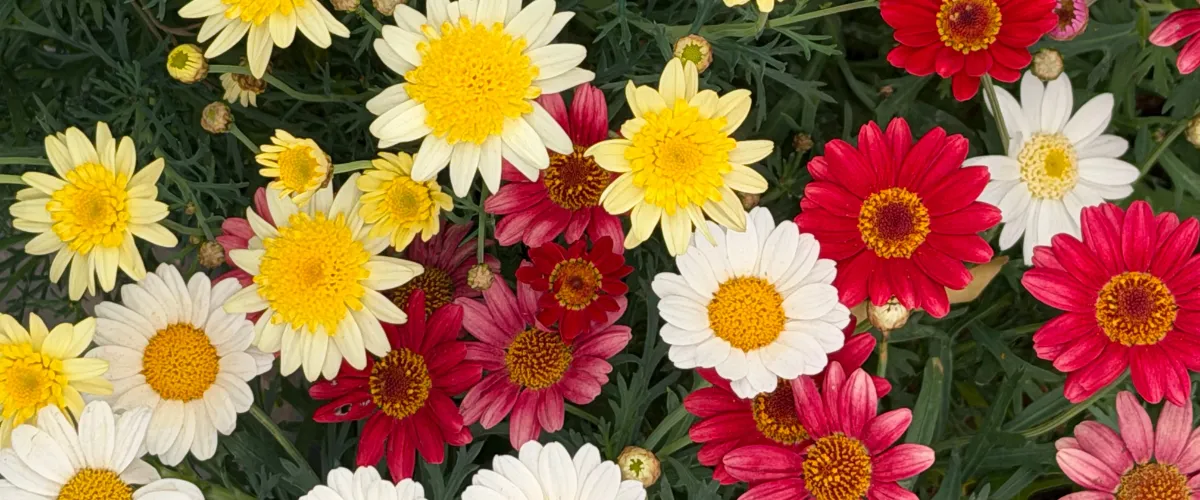
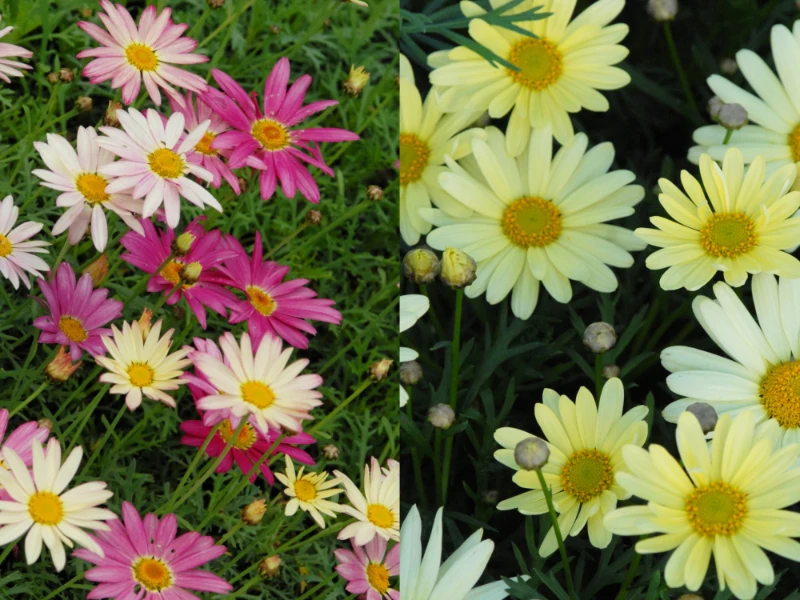
Loved by cottage gardeners and arguably the most popular garden daisies of all, today’s colourful marguerite daisies are descendants of Argyranthemum frutescens, the original white marguerite, a small shrub native to the Canary Islands. With finely divided fern-like foliage and ever more compact growth habits, these now highly bred plants come in a huge range of colours and flower forms, including doubles. Modern favourites include the Federation Daisies and the Lollies series, all of which make excellent container plants. Older varieties are often seen in gardens. Their names long forgotten, they may grow up to a metre tall, but are generally very hardy and enduring, and are favourites for sharing among friends via cuttings. ‘Marguerite’ is the French word for daisy, in particular the pretty roadside weed Leucanthemum vulgare, which we call ox-eye daisy.
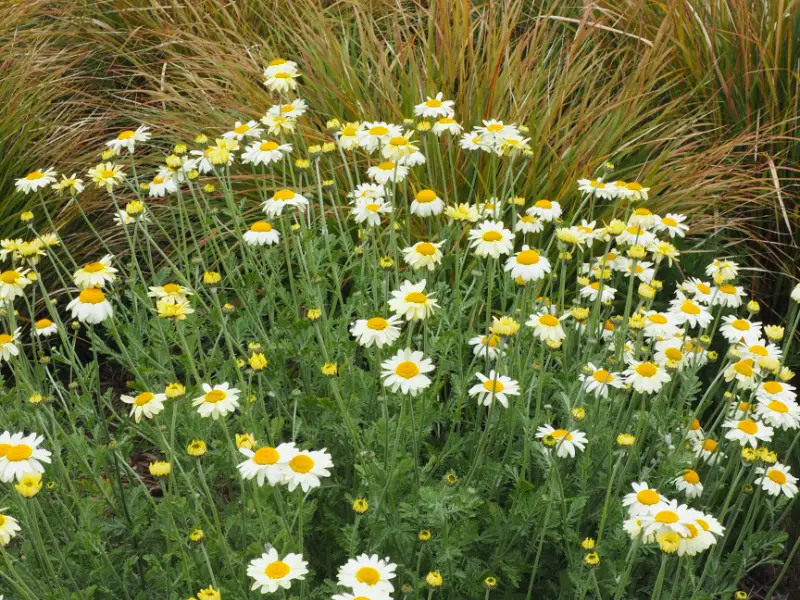
Known variously as golden marguerite, yellow chamomile and dyers chamomile, Anthemis tinctoria is a hardy perennial that grows wild where winters are colder, including meadowlands of Europe and North America. Garden varieties such as EC Buxton and Sauce Hollandaise are popular in English gardens and perform well as perennials in our South Island. With ferny aromatic foliage bearing loads of blooms in tones of white, cream and buttery yellow, they look great with grasses.
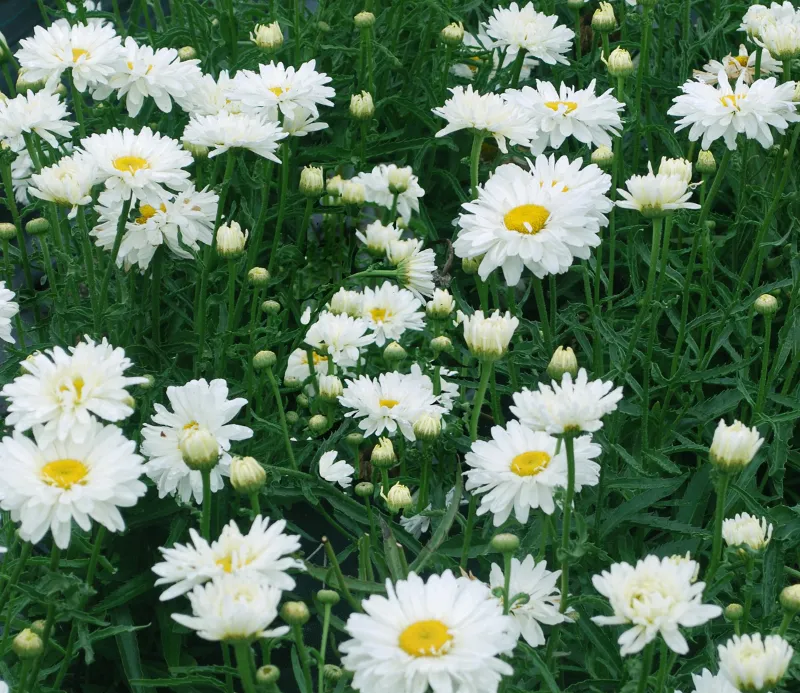
The original Shasta daisy, Leucanthemum x superbum, is a hybrid plant created in the late 1800’s by American plantsman, Luther Bank who named it for the snowy peaks of California’s Mount Shasta. With strong long stems and large showy blooms, the Shasta daisy is perfect for picking. The original white Shasta daisy with its yellow button centre has been joined by some beautiful double and soft yellow varieties, including Leucanthemums ‘Banana Cream’ and ‘Paladin’.
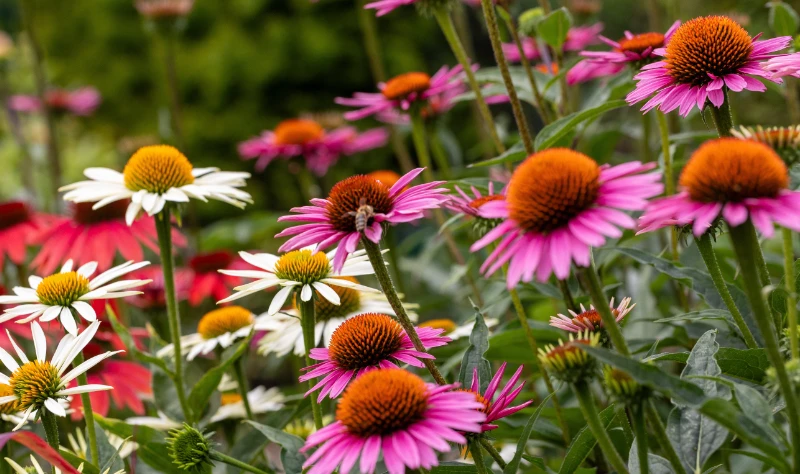
Echinaceas (aka coneflowers) have come a long way since Native Americans discovered the medicinal qualities of this lovely purple wildflower. Still today Echinacea purpurea is widely used in natural healing, while modern plant breeding has come up with an expanding choice of colours. Recent releases include the Sunseeker series in six striking colours. Echinaceas bloom from summer through autumn.
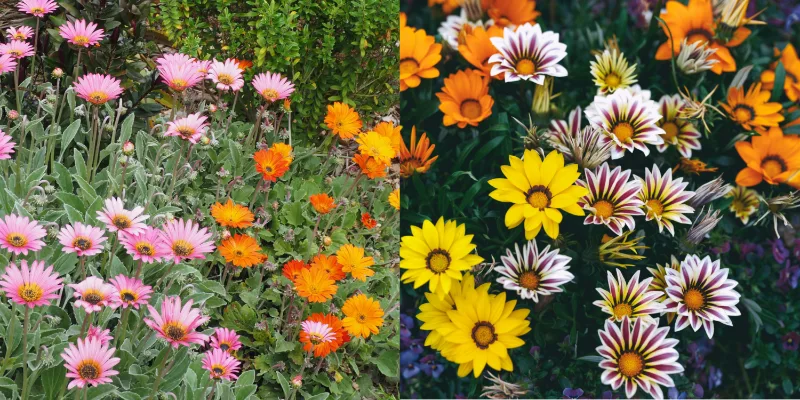
From the grasslands of America and Mexico comes the Gaillardia daisies, aka blanket flower or firewheel. Grown mainly as annuals their stunning orange and red colours make an eye-catching accent in borders, rockeries and pots over summer and autumn.
South Africa is home to many of the world’s most beautiful plants, including many different daisies. At least three different species are known widely among gardeners as ‘African daisies’.
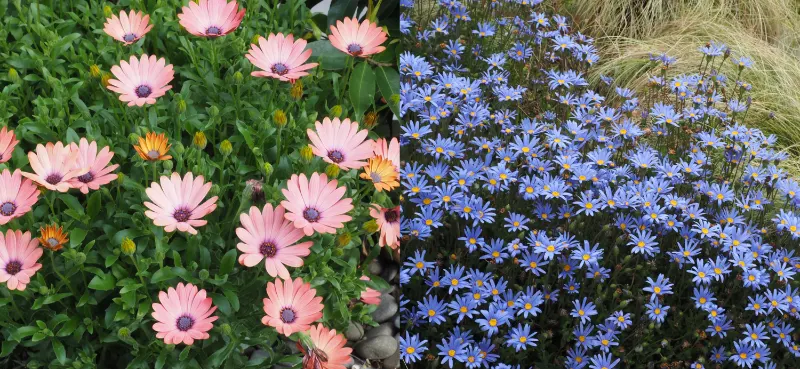
The Osteospermum varieties, also known as Cape daisies, African daisies or sailor boy daisies, are perennial plants with bushy mounding growth habits. Resilient older forms are commonly larger growing plants, often white and shades of pink or purple. Modern breeding has led to an explosion of extra colours on compact plants. These fabulous seaside plants bloom from spring till the first frost. In colder climates they are grown mainly as annuals or can be protected from frost by overwintering indoors in pots.
Blue African daisy, Felicia amelloides has perfect sky blue with sunny yellow centres. This long-time favourite grows superbly in warm coastal climates. Around 30-40 cm tall and wide, it’s a good choice for rockeries or pots and a contender for mixed hanging baskets. Felicia will survive a light frost if the soil is free draining.
Also called African daisies, Arctotis are low maintenance groundcover plants which are useful for draping banks and retaining walls in dry or coastal gardens. Their flowers offer warm tones of cream, yellow, orange, red and pink with contrasting central discs on a textured blanket of greyish green leaves. Very similar but smaller growing Gazanias are loved for their long season display of bright jazzy blooms on a carpet of slender leaves. Gazanias are sensational as easy-care groundcover or container plants. Many African daisy varieties will close their flowers at night or during cloudy weather, keeping their pollen dry.
African daisies and others that hail from warm coastal climates (such as Marguerite daisies), are frost tender, but they can be protected over a cold winter in pots. For best flowering, feed potted plants regularly with a liquid plant food for flowers or controlled-release fertiliser.
Of all the daisy flowers that are native to Australia, the leading favourites for gardens are the Brachyscome daisies (aka Swan River daisy). These low mounding plants with fine ferny foliage are smothered in dainty daisies for much of the year and look great spilling over walls and pathways and pots. In recent times, new improved varieties have arrived in pink and white as well as the original purple.
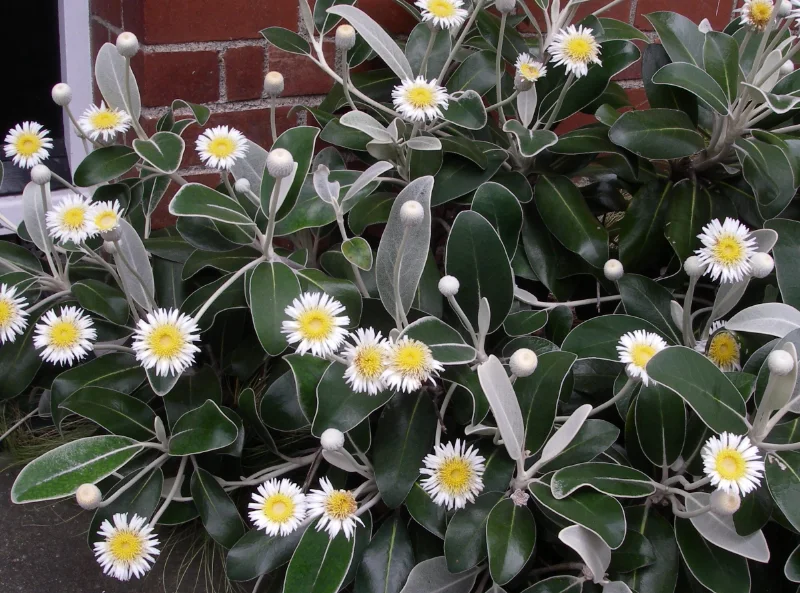
New Zealand daisies include the tough and beautiful Marlborough rock daisy (Pachystegia insignis), a great coastal plant with striking leathery leaves. The NZ mountain daisies (many different Celmisia species) are mainly alpine plants that thrive in colder climates. With some interesting foliage types as well as their striking flowers, they deserve to be seen in gardens more often.
Free flowering daisy plants can wear themselves out after months of non-stop blooming. Cutting back after the main flowering flush encourages further flowering and tidy compact growth.
TIP: Daisies combine well with flaxes, grasses and grass-like plants.