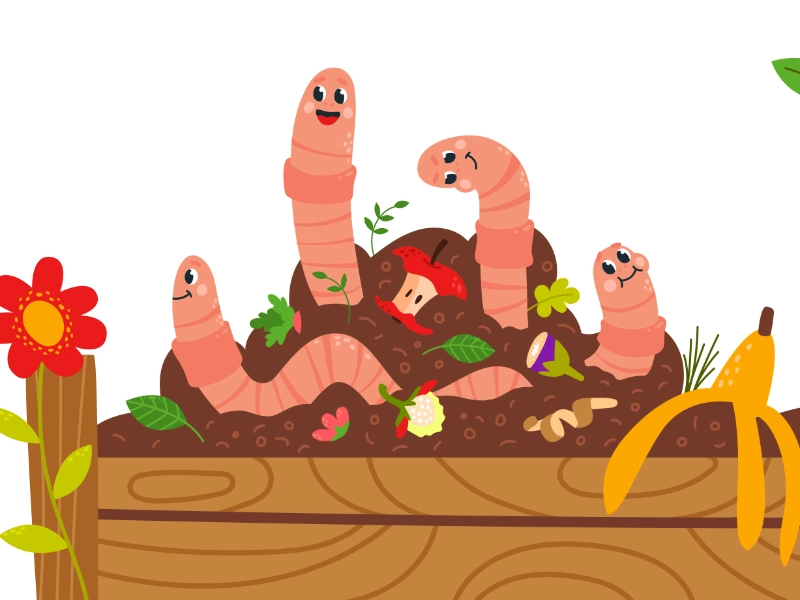
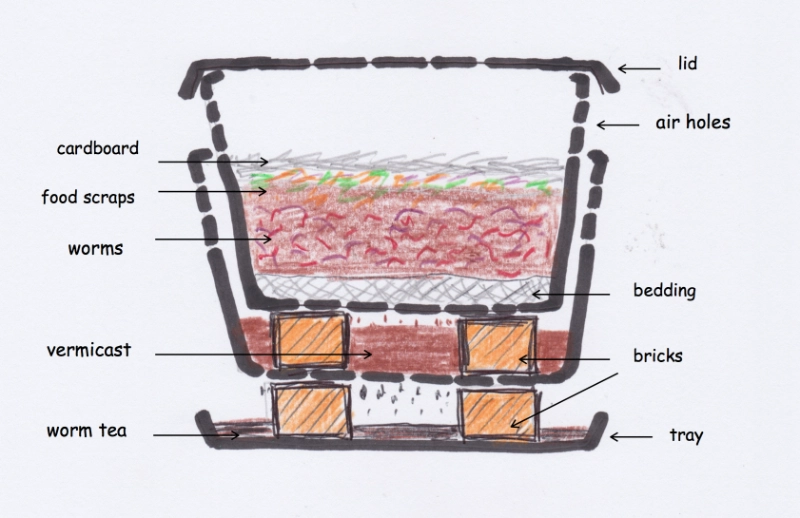
Another place to find worms is in a compost heap, or a worm farm. A worm farm is a special home for worms to live while they turn kitchen scraps into food for plants. If you don’t already have a worm farm, here’s how you could make one at home or at school.
Worms make ‘vermicast’, which is a very fine compost, and liquid ‘worm tea’. Worm tea is amazing liquid plant food. Before you feed it to your plants, mix it with enough water so it’s the colour of a weak cup of tea.
How to build a worm farm
You will need:
- Two matching plastic bins or large buckets with lids.
- A drill with two bits (approx. 6mm and 1.5mm).
- Newspaper, cardboard or egg cartons.
- Bricks or blocks of wood of the same height.
- Worms! Find them in a compost heap or ask at your garden centre or local environment centre.
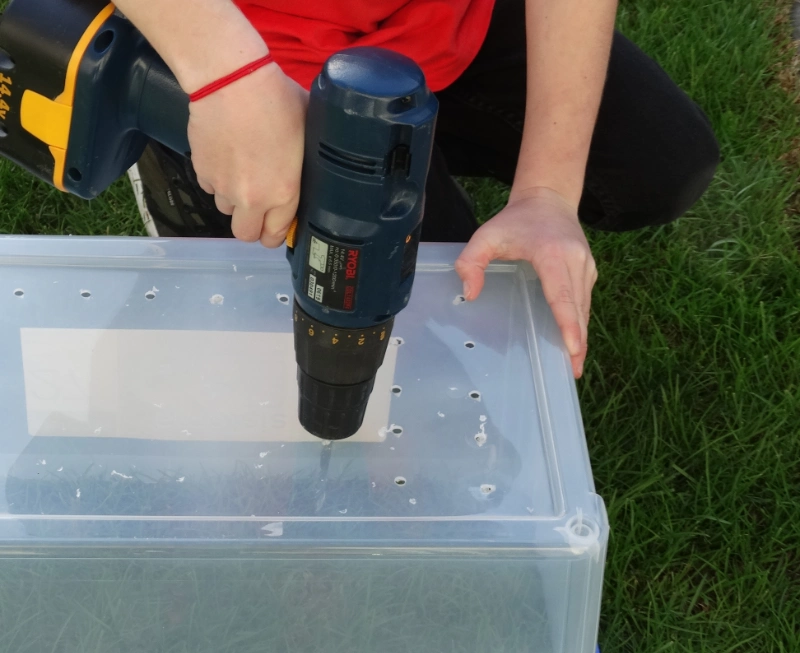
- With an adult to help, get drilling! Use the larger drill bit to drill lots of holes in the bottom of each bin. Use the small drill bit to drill holes in the top of one of the lids. These are air holes so the worms can breath. Drill more air holes in the walls of each container, near the top.
- Make their bed! Tear newspaper into strips, dunk it in water and then squeeze. Place a layer of damp shredded newspaper (about 10cm thick) over the bottom of one tub.
- Add your worms along with some soil. Add a few food scraps(not too much) to get them started. Cover with damp cardboard and then the lid with air holes.
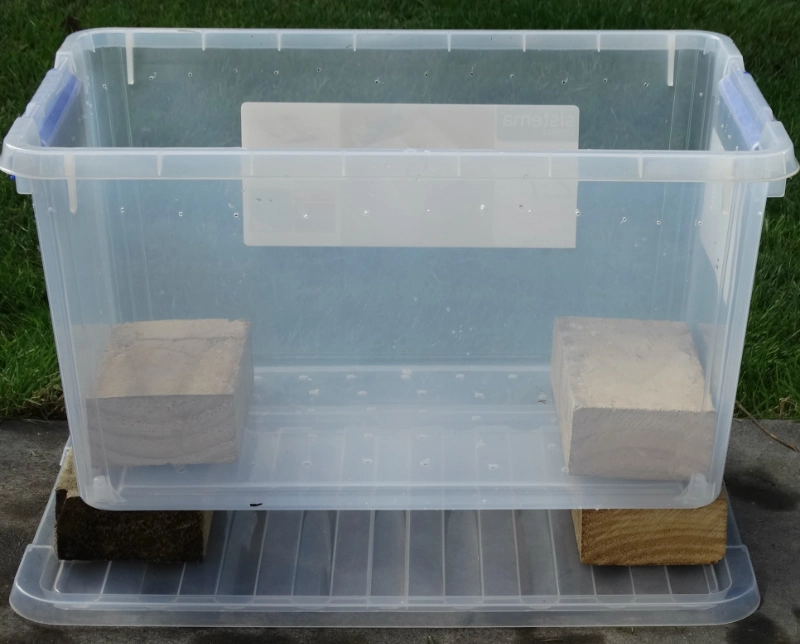
- The lid without holes is a tray to catch the worm tea. Place this on the ground. Place a couple of bricks or blocks of wood on top of the tray and then sit your empty bin on top. Put two bricks more inside the empty bin and then the bin with the worms in it on top. Your worm farm is ready to go!
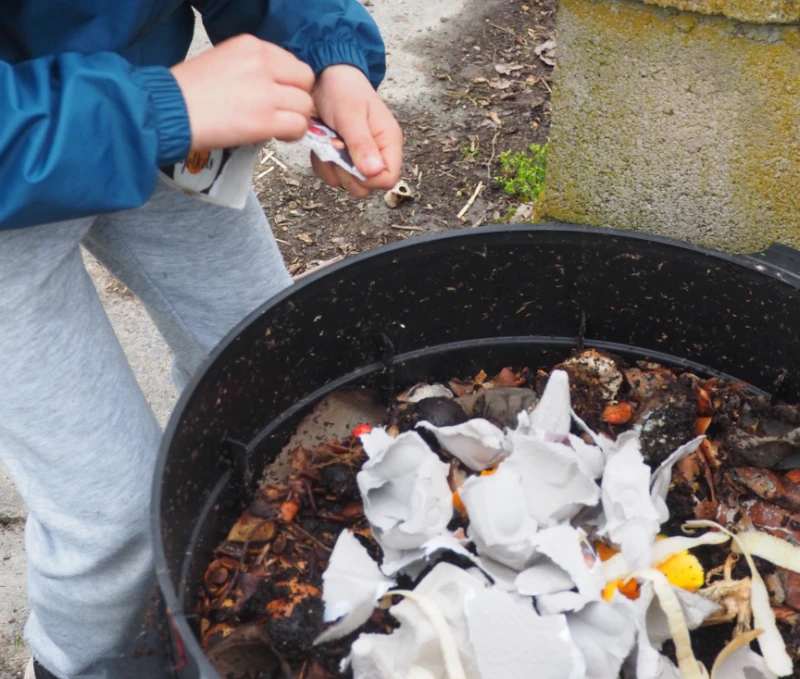
- Add food scraps each day or two, just a little at a time to start with. When the bottom bin is full of vermicast, tip it into the garden or a large container for plants. You can then make a new bed for them and build up another layer.
TIPS
- Worms love the dark. If you use clear containers to make your worm farm, throw a cover over it.
- Chop up their food. The smaller the bits of food, the faster the worms will eat it.
- Don’t let them dry out. Worms like a moist environment.
What do worms eat?
As long as its organic (something that was once living) they can eat it, but worms can be fussy. They don’t like too much citrus or onion skins and they eat their food faster when it’s chopped up small.
Worms love vegetable scraps especially pumpkin and rotten avocado, ripped up egg cartons and coffee grounds. Be careful not to overfeed them. If you pile on more food than they can eat, it will just rot and the worms won’t like it. If your worm farm starts to get smelly, slow down the feeding.
In a healthy worm farm, worms will have lots of babies and multiply fast! So, it won’t take long before your worm farm will be able to recycle more food.
DID YOU KNOW?
- Not all worms are the same. Compost worms are smaller than earthworms which live deep in the soil.
- Compost worms thrive when it’s 13-25°C. Keep them ina shady spot in summer. In winter they will like more sun. Shelter in a warm shed during frosty weather. Or you could cover your worm farm with an old blanket.
FUN FACTS
- A worm is a hermaphrodite - which means it is both a male and a female.
- A worm eats its own weight in food every day.
- Worms lay eggs in cocoons. Each cocoon contains 3-5 baby worms.