
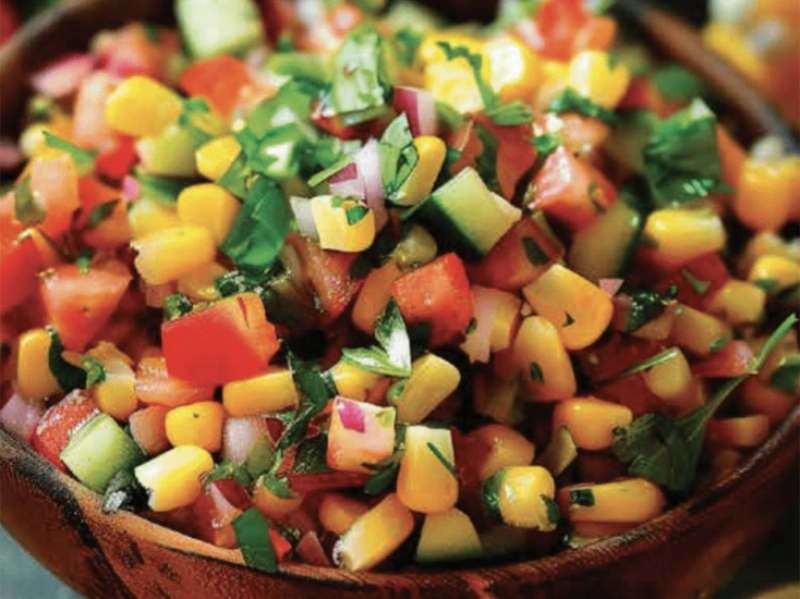
With the promise of warm balmy weather ahead, November is planting time for sweetcorn, chillies and sweet peppers. Brought together in a bowl, these summer treats make a salsa that’s as lively and bold as the dance it’s named after. Corn and capsicums bring the sweetness, while chillies add the heat.
The sweetest corn of all is one picked from your own garden. That’s because as soon as it’s picked off the plant, its natural sugars start turning into starch. Sweetcorn is a variety of maize (Zea mays). Unlike maize, which is harvested when fully mature and dry, sweetcorn is picked while young, sweet and juicy. It’s origins trace back over 9,000 years to southern Mexico and a wild grass called teosinte that was domesticated by ancient peoples. Over the centuries, selective breeding has resulted in the golden ‘ears’ we know today.
Sweetcorn is available as small seedlings for transplanting, but ideally it is grown from seed sown directly into nutrient rich, well-drained soil. The other key ingredients are warm weather, full sun, and a bit of space. Seeds are large and sweetcorn grows fast, making it a fun crop for beginners.
Choose a variety to suit your garden and climate. The days to maturity given on seed packets is a guide, but weather and climate also has an influence on the time from sowing to harvest. The quickest to mature (aka ‘earliest’) sweetcorn varieties are great for shorter growing seasons down south. In warmer climates sowing a block of early croppers and another block of a later-maturing variety can extend the harvesting season.
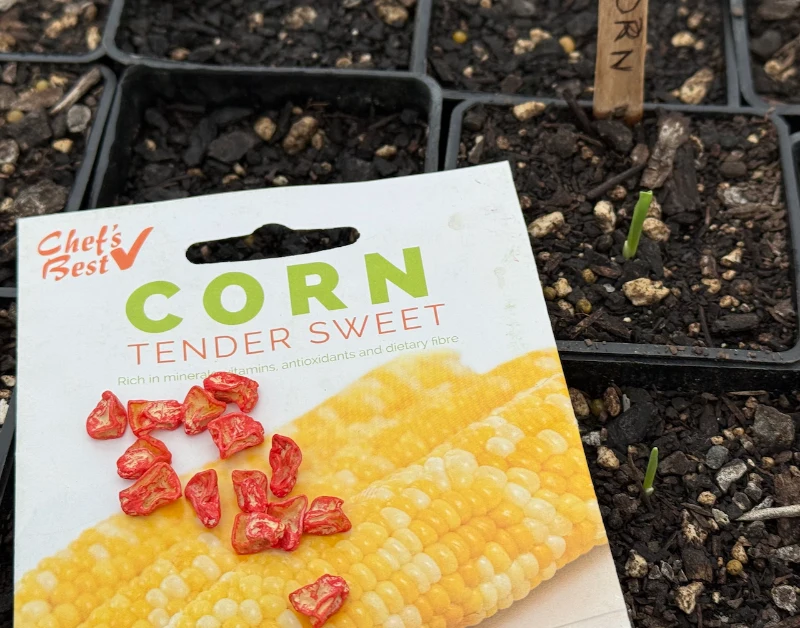
F1 hybrids are the sweetest and most popular sweetcorn varieties for home gardens. The likes of Early Marika, Early Chief, Honey Sweet, Sun ’n’ Snow, and Tender Sweet are early maturing varieties, ready to pick 80-90 days after sowing. Later maturing Honey ’n’ Pearl matures in 100-110 days. This two-toned sweet corn was bred for its ability to stay sweet for longer after picking.
For those who like a less sweet corn, there are heritage varieties such as Early Gem and Golden Bantam. However, most heritage corn is grown mainly for grinding into flour. Some heritage varieties have multicoloured cobs that make attractive autumn decoration.
Because sweetcorn is a warm season crop, it should be planted after the last frost,when soil temperatures are consistently above 15°C. Choose a sunny spot with well-drained, fertile soil. Adding compost to the soil before planting will help provide the moisture and nutrients corn needs to thrive.
Sweetcorn is wind-pollinated, so it is best planted in a block rather than a single row. Sow seeds directly into well prepared soil, 2-3 cm deep and about 30cm apart. Keep the soil damp (not wet) while you wait for the first leaves to appear (7 to 14 days).
If you have plenty of seed (or if the seed is near its use by date), sow two seeds at each station (in case one doesn’t germinate). Then, when your seedlings reach 5-10 cm tall, use scissors to snip off the weakest seedling. This avoids upsetting the roots of its mate.
Sweetcorn needs consistently moist soil, especially during flowering and while the cobs are forming. Soak the soil thoroughly to ensure water soaks deep down to the roots. Spread mulch, such as pea straw or homemade compost, around young plants to keep the soil moist. Feed with liquid fertiliser about once a fortnight. Do this after plants have been watered. Alternatively, before mulching, sprinkle blood and bone around the plants and then water thoroughly. Sweetcorn needs lots of nutrients.
A blanket of organic mulch keeps roots cool and moist, blocks weeds and builds healthy soil.
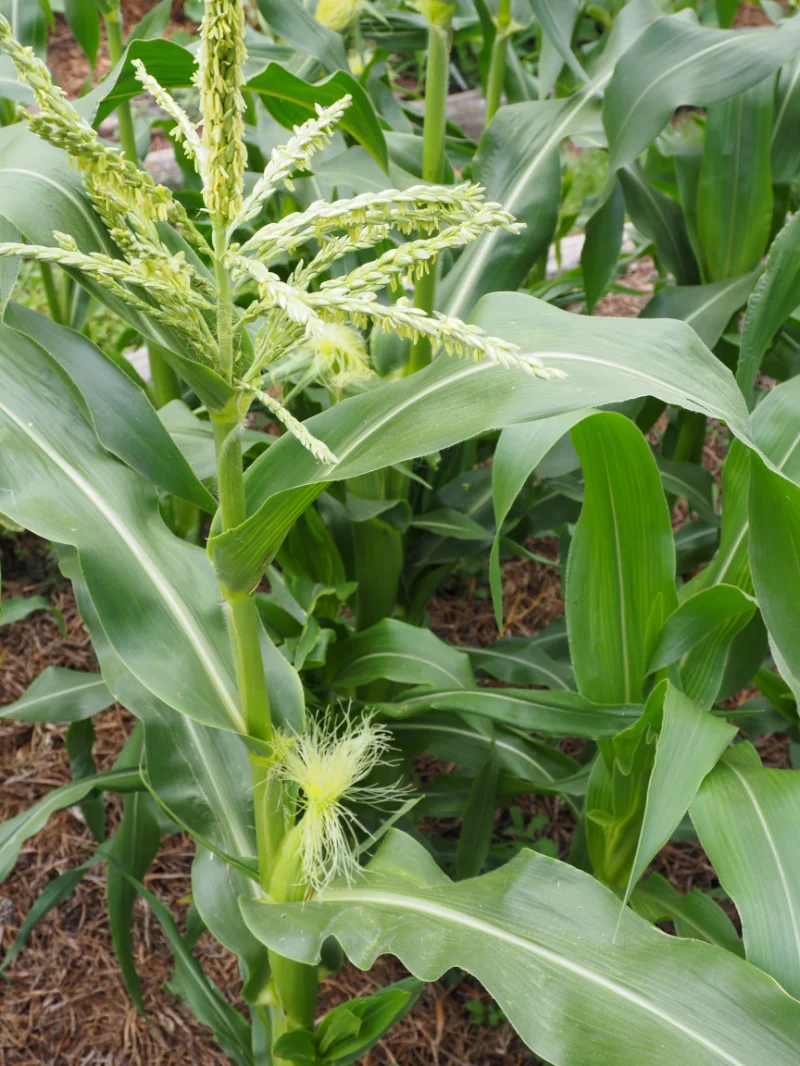
Corn plants have separate male and female flowers. At the top of each plant are the male ‘tassels’ which make pollen. The cobs (usually two of them) grow under the tassels and are called ‘ears’. The female ‘silks’ grow out of each ear. When pollen from the tassels drops on the silks, each silk acts like a straw to carry a tiny pollen grain down into the ear and make the yellow corn seeds called ‘kernels’ grow. When there isn’t enough pollen the corn cob has gaps.
Planting corn in a grid rather than a single row improves pollination, as the wind moves the pollen more effectively through the crop.
TIP: Wind moves the pollen but you can help too: gently tap the tassels with a stick.
Sweetcorn is usually ready to harvest 18-24 days after the silks appear. The cobs are ready to pick when the silks turn dark brown. To check, peel back the husk slightly and pierce a kernel with your fingernail. If the juice is milky, it's ready. If it’s clear, wait a few more days.
TIP: The shorter the time from picking to cooking, the sweeter your sweetcorn will be.
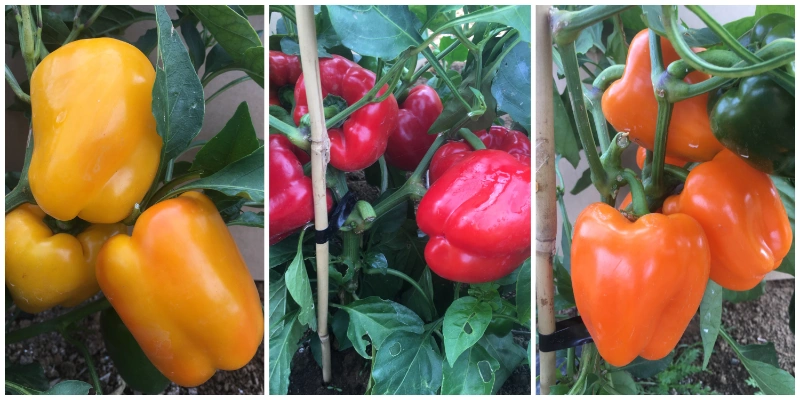
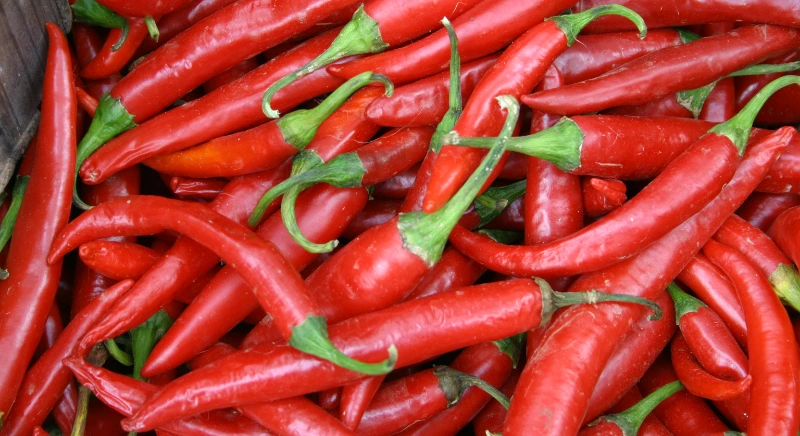
Capsicums, in all their vibrant hues, come in an array of shapes and sizes, from the fiery tongue-tingling chillies to the sweet, succulent peppers. Both belong to the same plant species, Capsicum annuum, and share a rich heritage rooted in Mexico.
Hot chillies, whether fresh, pickled, or dried, add a fiery kick to all sorts of recipes. Sweet peppers shine in salads and take on an irresistible depth of flavour when roasted or grilled.
Growing these colourful fruits requires patience and the right conditions. They need at least three months of warmth to fully ripen, so growing them outdoors is a little more challenging for gardeners in cooler climates. In warmer regions, capsicum growing is a breeze - just be sure to plant early enough so they have plenty of time to flourish. Planting too late may leave you with under-ripe fruit when the cool weather sets in. If planted in mid-summer when temperatures are high or the ground is too dry, fruit may not set.
Start with good-sized seedlings, which arrive in garden centres in mid spring. You might also raise your own chilli plants from seed sown into trays of seed raising mix. If frosts still threaten, keep seedlings snug in their pots in a sheltered spot and plant them out as soon as the danger has passed.
Capsicums love a sunny, warm spot with fertile, well-drained soil or potting mix. Protect young plants from slugs and snails. Feed at planting time and again when the first fruits appear.
Capsicums are an ideal vegetable for growing in pots. Choose a good sized pot, at least 25cm diameter for each plant, and keep it well fed and watered.
The fruit starts ripening quickly in autumn. Harvest at any stage from green to red, depending on the required flavour. Sweet bell peppers change from a tangy pungent flavour when green to a sweeter, mellower flavour when red, orange or yellow. Chilli peppers get hotter as they ripen from green to red.
Harvest frequently as peppers deteriorate very fast when past their peak ripeness. Excess peppers can be sliced and frozen for later use or turned into delicious relish and chutney. Hot chillies can be strung together in "ristras" to hang in your kitchen, drying slowly throughout the winter months.
Serve with tacos or corn chips as part of a Mexican feast or simply as a side salad with a summer barbecue. Experiment to find your signature variation on this basic recipe. A fresh corn cob - popped straight into boiling water as soon as you’ve picked it from your garden - makes the best salsa of all.
1-2 cups corn kernels
1/2 red onion, finely diced
1 garlic glove, crushed
1 bell pepper, finely diced
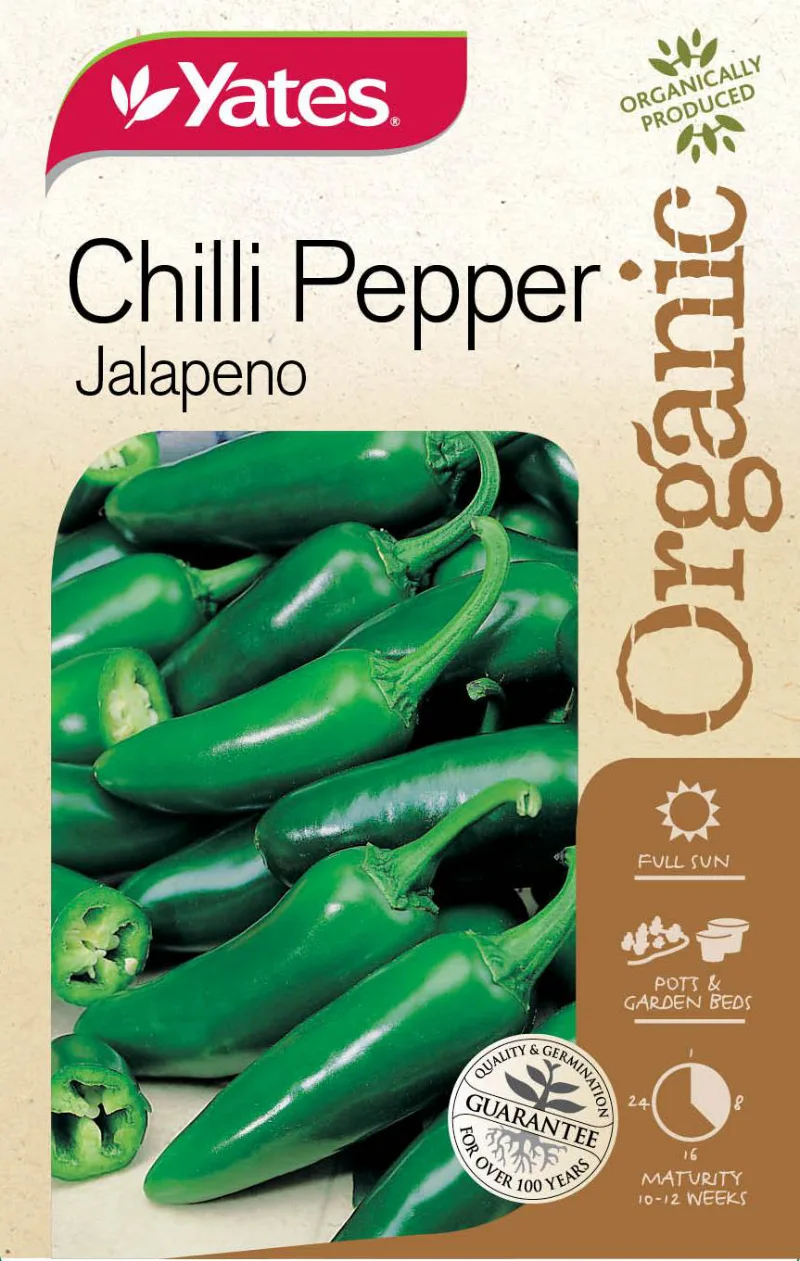
1 jalapeno (or 1/2 red chilli), finely chopped
1/4 cup coriander finely chopped (or mint, parsley or basil, esp Thai basil)
1 tbsp lime juice (or lemon)
1 tsp honey
1/2 tsp salt
Optional extras:
Avocado, black beans, tomato, cucumber
Combine ingredients and wait half an hour before serving.
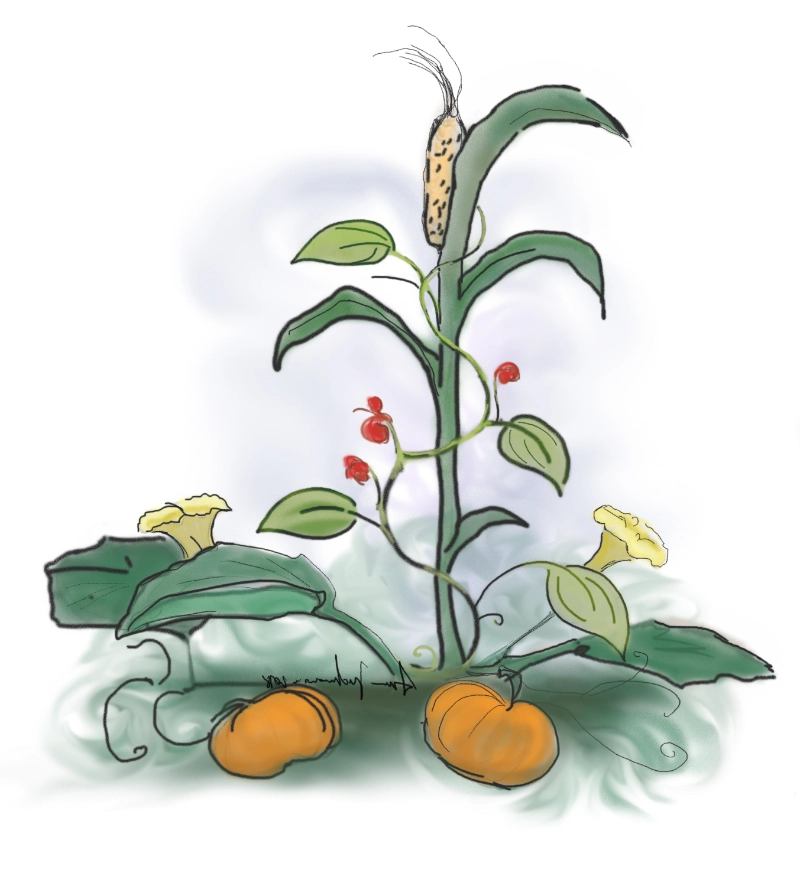
The Three Sisters
The ‘Three Sisters’ is a traditional native American companion planting method involving corn (or maize), beans and squash all grown together in symbiotic harmony. Sometimes sunflowers are added to the mix as a ‘fourth sister’. Corn and sunflowers provide supports for beans to climb, beans fix nitrogen in the soil, enriching its fertility, while squash spreads along the ground, suppressing weeds and helping to retain soil moisture. Visually, it’s a kind of chaos gardening - a look of thriving abundance that’s far from tidy but can be highly productive and good for the soil.