
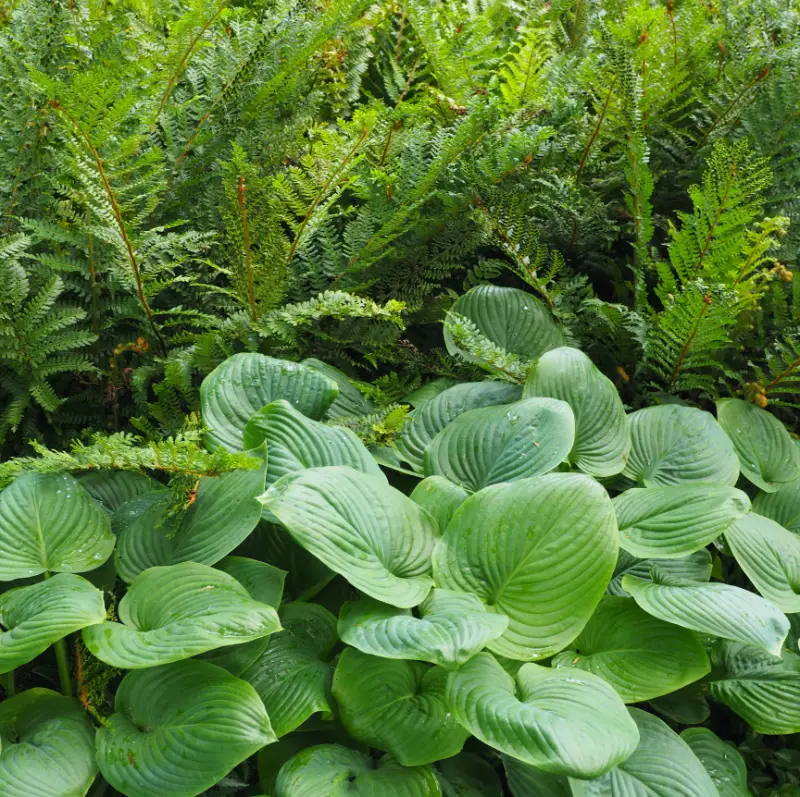
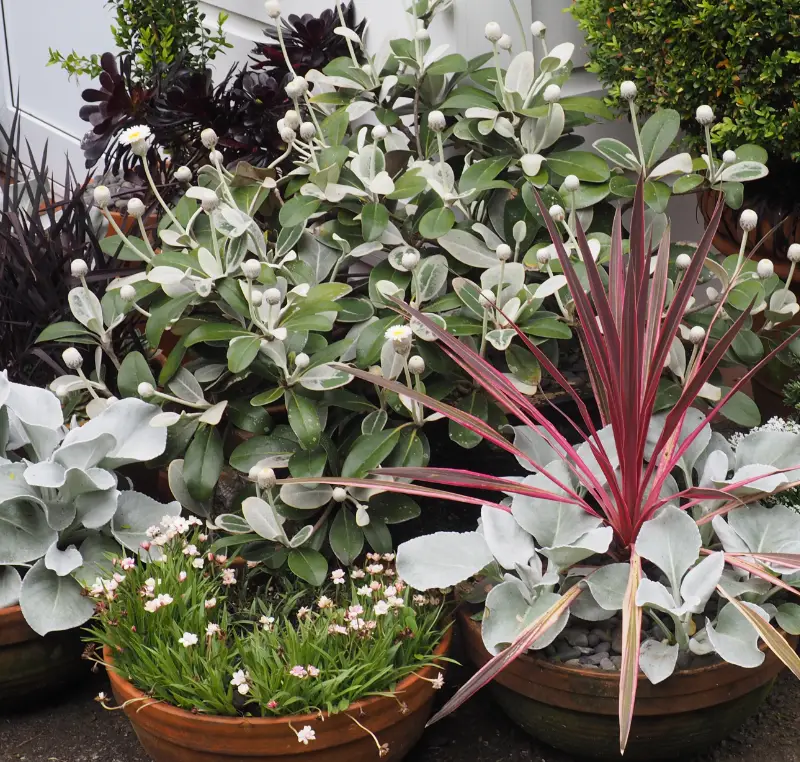
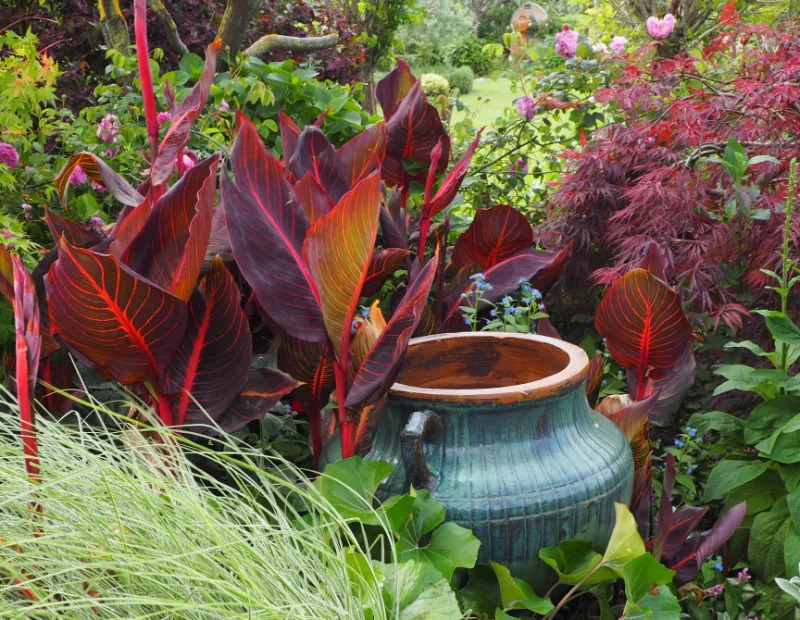
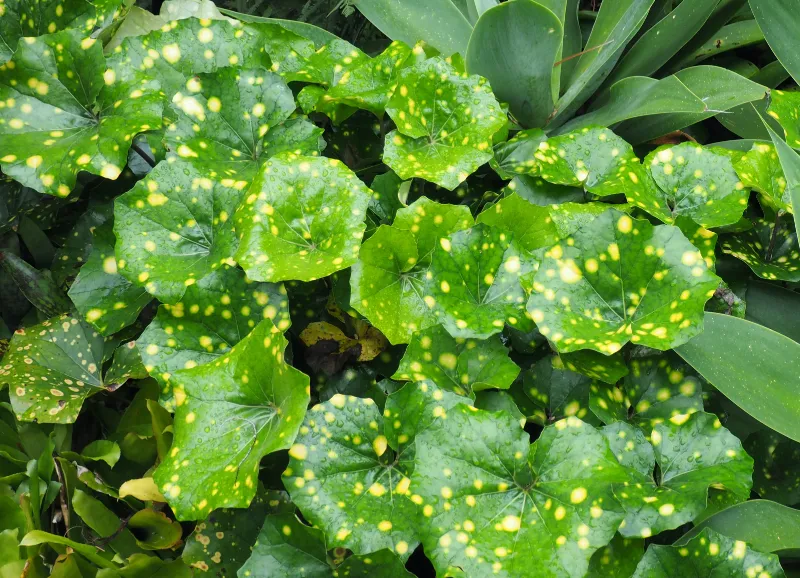
In a garden, leaves speak a language all their own. The way they differ in size, shape, and sheen tells a story of balance and contrast, of drama and repose.
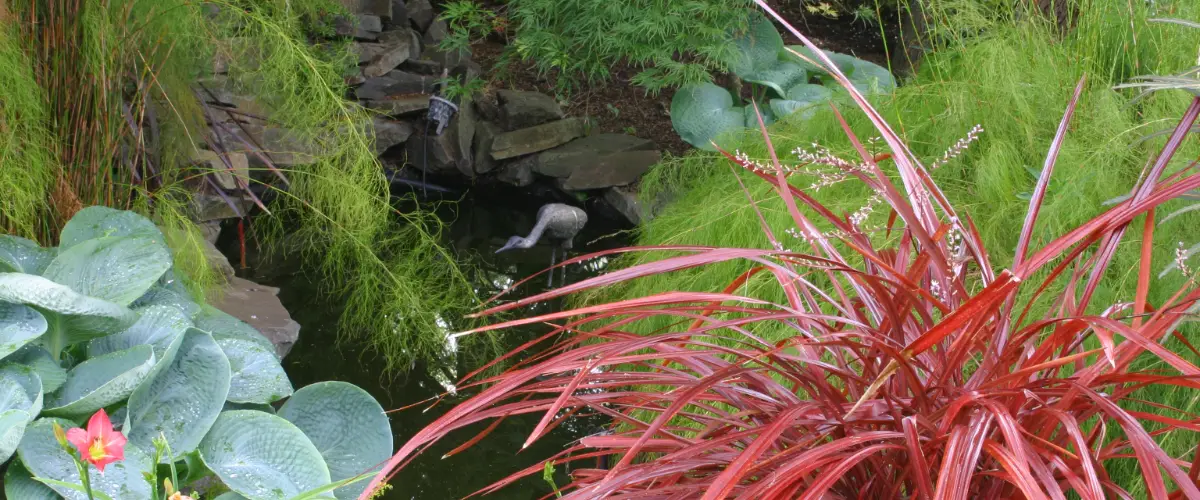
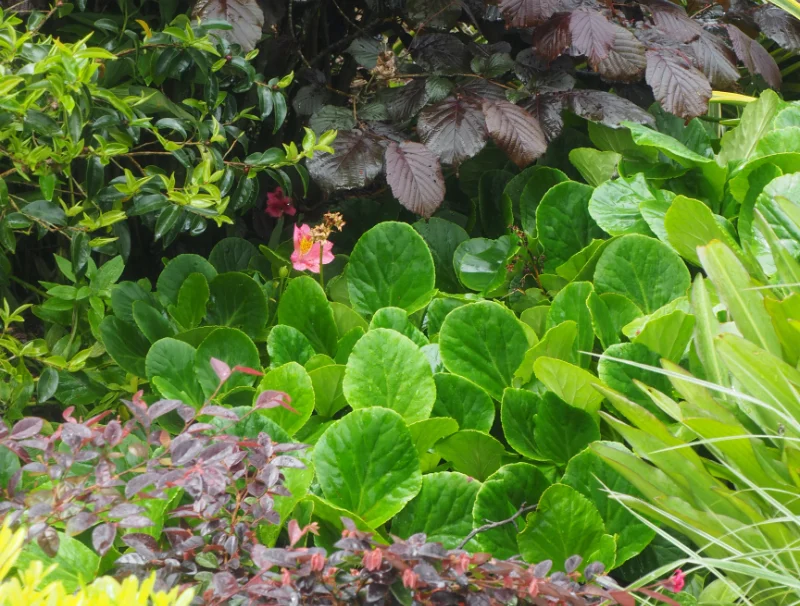
Big leaves and small leaves, side by side, create a quiet choreography. The bold, rounded foliage of bergenias, heucheras, begonias, ligularias, or Chatham Island Forget-me-nots, has a presence that feels generous, almost sculptural. Beside them, the airy fronds of ferns or fern-like plants offer a whisper of detail, softening the scene. Even within the same shape, a shift in scale creates harmony; the broad pads of Bergenia leaves alongside neatly compact ajuga, for example, or the sword-like sweep of flax blades mingling with the fine threads of ornamental grasses.
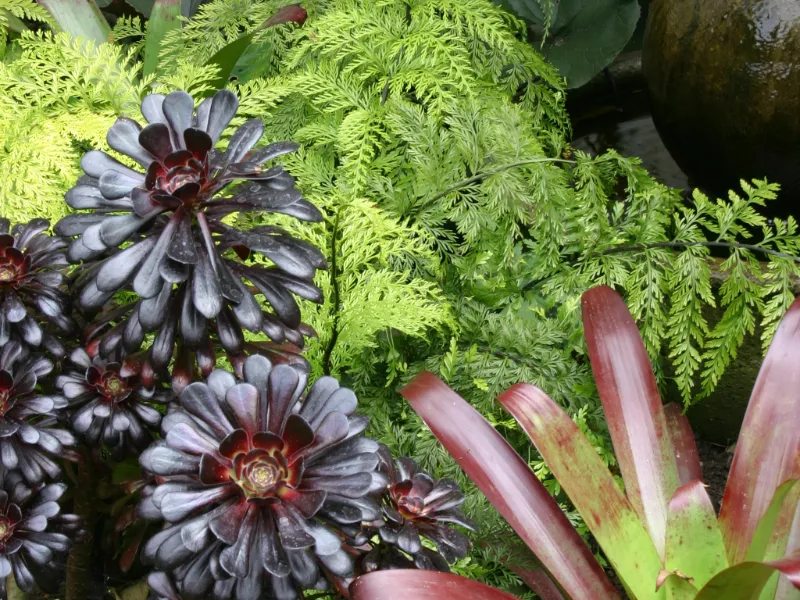
Shape has its own intrigue. Spikes, for example, can be electrifying. A succulent’s upright spears or starbursts seem sharper, more architectural, when they sit on a smooth carpet of diminutive leaves. Scleranthus (moss plant), with its velvety, close-knit texture, or delicate Pratia, make the perfect foil. The tension between formality and softness invites the eye to linger.
Shiny leaves are all the more striking next to low-sheen plants. A glossy leaf catches the light like polished stone, demanding attention. A matte or velvet textured leaf, by contrast, absorbs and diffuses the light. Together, they set each other off beautifully, like silk against wool. Often, these different leaf textures go hand in hand with different tones of green and grey. A rich layering of hues can create a refined kind of drama, more elegant than showy.
Colour steps in as the final flourish. When green meets red, the contrast is immediate and timeless. In foliage, reds range from the glow of autumn rust to the deep,wine-dark shades of purple-reds, each adding a flicker of energy to a planting scheme. Green soothes; red wakens the senses.
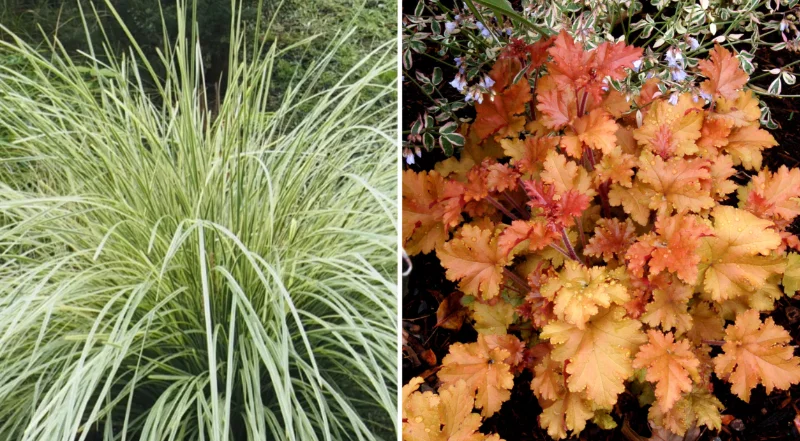
Some leaves carry their own built-in sunlight. Variegated foliage, splashed or edged with gold, cream, or white, can brighten even the gloomiest corners. In shade, these leaves act like lanterns; on dull days, they turn up the wattage of the whole scene. Yet they are best used as spotlights, not floodlights - overuse them and your garden may end up looking washed out and sickly.
A garden that plays with these contrasts - big and small, spiky and curvaceous, glossy and matte, green and red, plain and variegated - becomes a tapestry of textures and tones. The leaves are no longer just the background to flowers; they are the quiet stars, changing with the light. Step in close, and the details unfold. Step back, and the scene hums with harmony.
The origins of variegated leaves are complex and varied. Some are genetic and passed on via seed. Some result from a benign virus. But most variegated plants came about as a chance mutation, and must be reproduced via vegetative means, not seed. When an all-green shoot appears on a variegated plant, it is important to cut it out completely so the entire plant doesn't revert back to its more vigorous green form.
It is an absence of green chlorophyll that causes the yellow or white colours in variegated leaves. But other pigments are involved to varying degrees, hence the boundless array of interesting leaf colours and patterns we find in our plants. There are stripes, spots and freckles, leaves with fine margins and those with broad gold margins. The menu is extensive, with something for every taste and situation.
Because they have less chlorophyll, they capture less of the sun's energy, so variegated plants generally grow more slowly and not as large as their plain green versions. This can be a very useful thing in a small garden. While variegated plants often give their best colour in sun, many of them prefer protection from hot sun.
FUN FACT
Leaf adaptations like being fleshy, fuzzy, or waxy are nature's way of helping plants deal with hot and dry conditions. They help the plant lock in moisture, keep cool, and prevent too much water from evaporating.
Ligularias stand out with their big kidney shaped leaves.The huge shiny ‘tractor seat’ Ligularia reniformis is a great choice for shady locations, catching the light with its high gloss leaves. Ligularia Rukuhia Beauty is an attractive lower growing form with smaller, glossy green leaves.
Quirky spotted leopard plant (L. aureomaculata) or creamy variegated L. argentea, add extra sparkle to shady corners. In rich chocolate-red tones, Ligularia Britt-Marie Crawford is lovely for colour contrast and is beautiful with hostas and ferns. The taller Ligularia dentata Desdemona has huge heart-shaped leaves, bronze-green with purple backs. Close relative, Farfugium japonicum Crispatum (aka Ligularia Martian Invader) has distinctive curly leaves.
All ligularias produce gold daisy flowers during summer. Some gardeners remove them early to keep the focus on the leaves. Cutting off spent flowers and damaged leaves promotes new growth.