

Rachel Weston is grateful for a childhood that instilled in her a connection with nature and homegrown food. She grew up in Northland, in the days when kids played for hours outdoors and everybody had a vegetable garden in their backyard.
She had grandparents at the beach and grandparents who lived on a farm. Her parents and their friends had big gardens with backyard fruit trees.
“Vegetables were always from the garden and if we did need to buy something it was from a green grocer, never a supermarket. I think I was very lucky. If I’d missed that era I wouldn’t know about all that food growing and preserving. There were homegrown beans and potatoes and boxes of fruit for preserving and we’d all be in the kitchen with mum. Nana would be there too and we'd all have a job. Everybody did it!”
It was a way of life that's not so common nowadays, but Rachel is optimistic that there is a shift back to growing our own food and she’s excited to feel part of it all.
Gardening took a back seat when she was living the busy city life as a young travel agent in Auckland. Then life led her back to the country after meeting her husband, Stuart, who has always been involved in horticulture.
“With our children on the scene I thought, ‘Right, this is what I need to get back into’ and I’m finding more and more parents are now doing the same. I think Covid probably gave it another big push.”
While homeschooling her three children, it made sense to incorporate the outdoor lifestyle into their lessons. Rachel says she feels very lucky she was able to be a stay-at-home mum and believes that helped to instil a love of nature in her children.
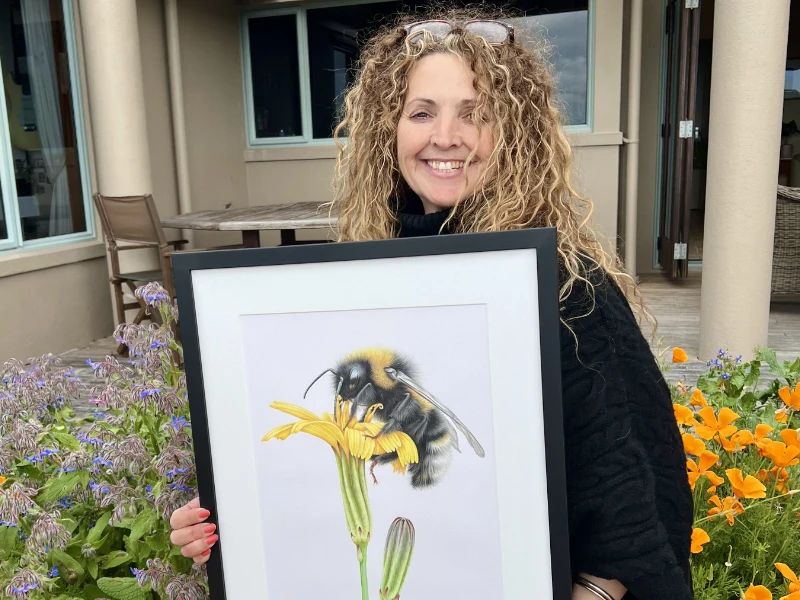
Meanwhile, she was on her own learning curve, eventually becoming a self-publishing children’s author. She credits orchard life as the catalyst of three books on the subject of bees. The more she discovered, the more she wanted to find out and the more she wanted to share the excitement with kids.
“One day, while I was working on a picture book, Stuart came home and said, ‘Do you know where bumble bees live?' I said I’ve got no idea, I guess they live in a hive. When he said they live in the ground I thought he was pulling my leg. When I looked it up I thought how did I not know?"
Then she read that the queen bumble bee hibernates during the winter by digging a little hole in the soil and ‘sits on her eggs like a mother hen’. And that bumble bees go through metamorphosis, just like butterflies.
A trip to the library revealed more. “I found out that bumble bees are covered in this oily liquid that protects them in rain. When they land on a flower they leave a sticky footprint on the flower that has a smell to it, so when another bumble bee comes along they can smell that that flower has been emptied of nectar so they move onto a different flower. It struck me that kids would love this information!” And so began a new book called, ‘Bumblebees Have Smelly Feet’.
“It’s so amazing how nature works,” enthuses Rachel. “It all works in harmony with all these little jobs and allthese incredible things bees do. They all mesh together and they all rely on each other.”
She believes it’s her own thrill of discovery that enables her to write her books with such passion. “I totally get that feeling of having not seen things before and then going, oh my gosh, that’s amazing!”
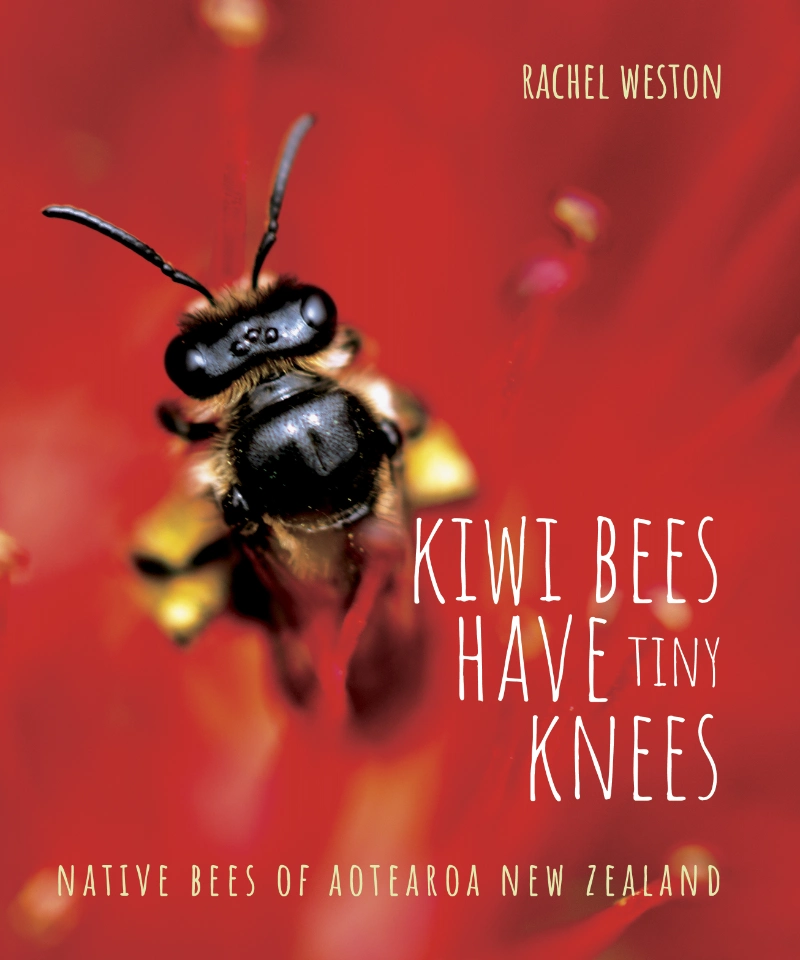
Yet another revelation inspired her latest book. “It wasn’t until I was nearly fifty that I found out that we have native bees. Again, I had no idea, even with all that time we spent in the bush. It’s opening my eyes to all these things that have been right under my nose all this time!”
She agrees she is not alone in this and that we are all slowly waking up to the smallest things in nature, some so small we cannot see them, but all just as critical to life on earth as the larger endangered species we can see.
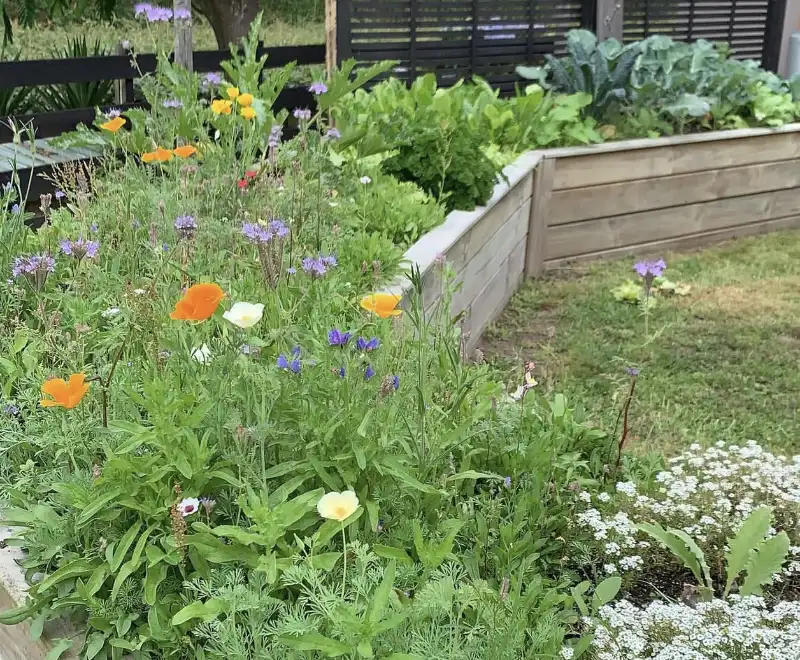
Rachel’s gardening is strongly influenced by her love of nature, but she also adores colour.“As well as the fact that bees, butterflies and birds go crazy in there, I just love all that colour.”
When it comes to flowers, she has no favourites. “I love experimenting with the wildflower seed mixes that produce a kaleidoscope of different colours popping up at different times over spring and summer.”
One of her wildflower beds is left to self-seed. “Apart from mowing it down after the flowers have dropped their seed in autumn, I really do no maintenance. I don’t mind a messy kind of look!” she reveals.
She spends a little more time tending the flowers she grows around her vegetable beds. “In this area I will pull them out when they are spent, after the new seed has dropped back into the soil. And I add more seeds or seedlings each year as I am harvesting and replanting,” she explains. She will sometimes pop in an extra punnet of flowering annuals along with her vege seedlings.
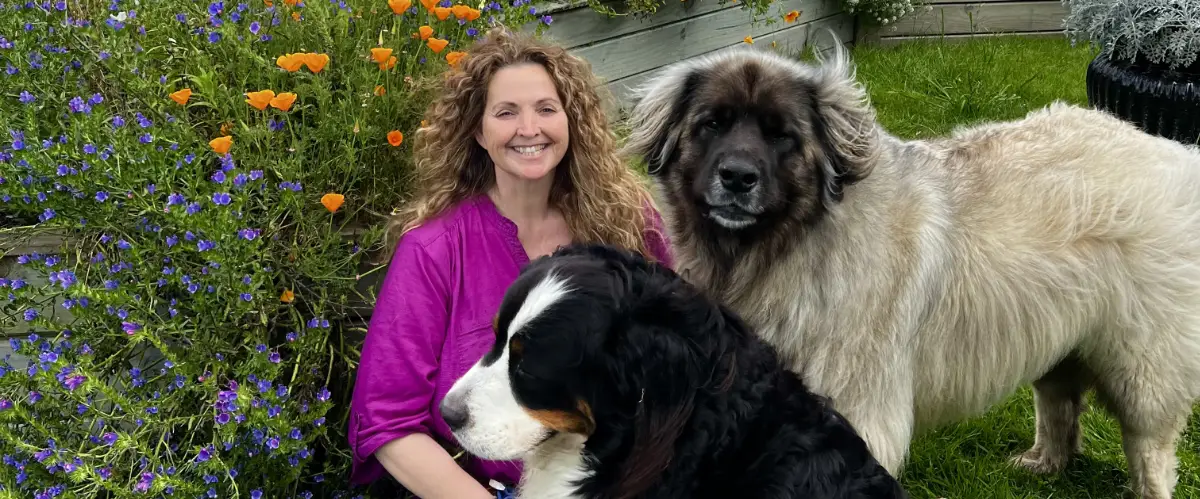
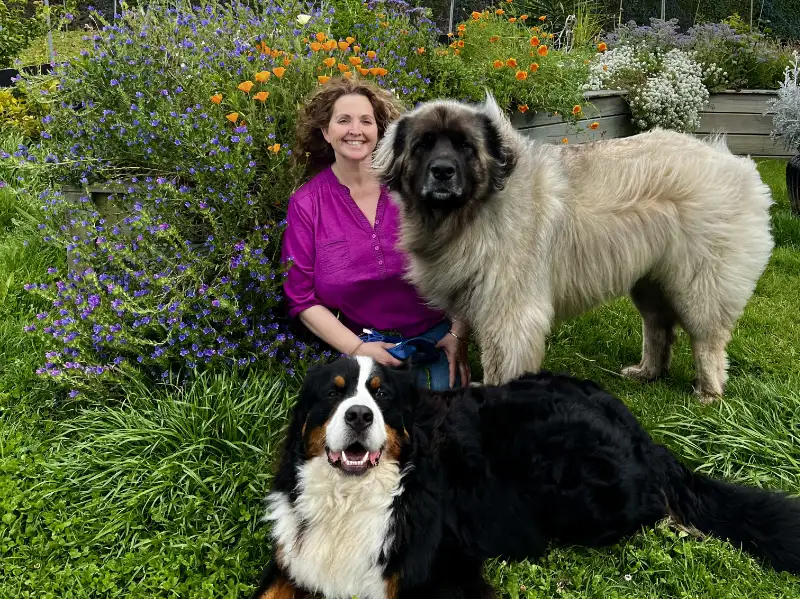
“I do love my garden with its pops of colour, the messy wildflowers and rhododendrons, as well as our grand mature trees and smaller shrubs. We love to walk our dogs among our sprinkling of fruit trees and our hillside of native trees.”
As soon as Rachel started learning about bees she was destined to plant native trees. “It is native trees that the native bees need. And, of course, all the other bees and other insects love them too.” She and Stuart have planted 3500 native trees so far. Each year they plan to plant 700 more.
The vast majority of their native planting is manuka and kanuka, both because they are fantastic for bees and because they grow quickly to provide shelter for the slower, larger native trees to grow. Pohutukawa trees are an important habitat for many native insects, including bees.
Smaller natives with flowers that native bees love include flax and hebes. “It takes a long time to grow a pohutukawa and you don’t always have the room, but anyone can plant a hebe,” says Rachel. “They love the colour purple but I have watched native bees swarming all over a white hebe too. We’ve planted a whole bunch of different hebe varieties.”
For gardens with enough space, she also recommends cabbage trees and manuka (Leptospermum). She has noticed that native bees are attracted to all the manuka cultivars, pink and white, double or single. Another bee favourite is the native mistletoe, rarely seen in gardens. She has just sown some seeds she hopes will take.
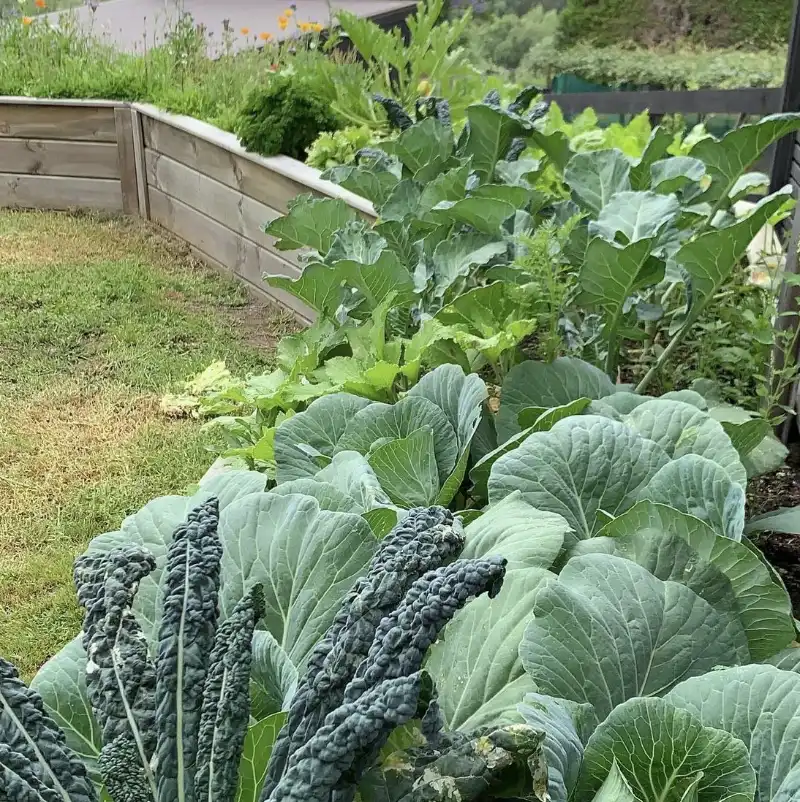
Busy with her books and the orchard, Rachel finds that growing vegetables in raised beds makes it easier for her to always have something to pick for a meal. She only has time for a modest sized vege garden, but grows a satisfying supply of fresh leafy greens and herbs. Her lettuces, tomatoes, and cucumbers are prolific in summer. There are pumpkins and zucchini too. Every year she likes to try something different.
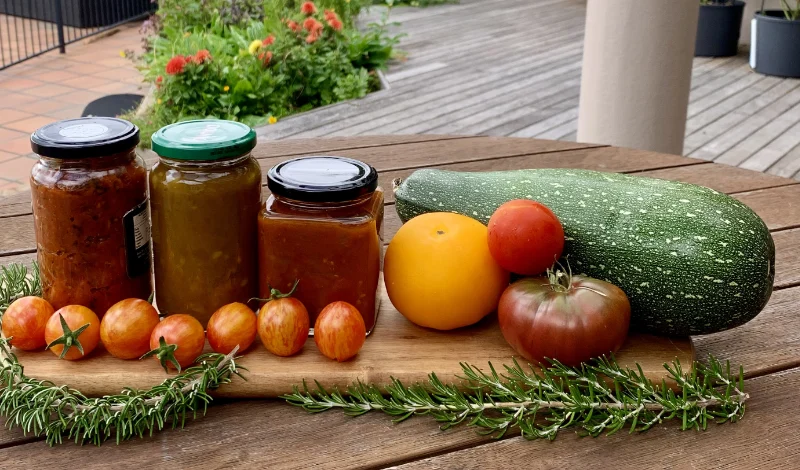
Having successfully grown lots of tomatoes in pots on her deck, she now simply pops a few tomato plants among her wild flowers and says it’s amazing how well that works. “I get the beautiful flower colours with tomatoes growing in amongst them so I can walk out among the flowers to pick my tomatoes. When they all come at once we have one of those days when we make tomato relish.”
A smattering of fruit trees she planted nine years ago gives her the joy and satisfaction of picking and eating her own fruit in season. “You don’t have to have acres and acres of fruit trees,” she assures us. She has a very prolific plum tree, a peach tree (even though it's not the best in the tropical climate) and a wall of passionfruit. She would love to have some grapes growing over a pergola.
Like most of us, Rachel says she has “Bursts of grand ideas, dreaming of larger vege gardens and dahlia beds.” But, while she is so busy with her books, her garden gives her plenty to enjoy just as it is.
She thinks about the generational gap in gardening knowledge, believing that it’s a lot to do with how we now spend our time. “Shops used to be closed on Saturday afternoon and all day Sunday”. And with longer working hours keeping up with the cost of living, it’s hard to find the time or energy to start a vegetable garden. Even with her passion for growing food, Rachel says she often struggles to keep on top of her small raised vege beds, so she gets it. But she’s sure of the right time to start talking about it, vowing, “It definitely starts with children.”
During spring and summer each year, Rachel takes time out from writing to visit school children. “Spring is when children connect all the dots about what’s going on outside,” she says.
“Kids pick up things so quickly! I hope the next generation will go through and they won’t wait until they are 50 before they start learning about native bees and all these other wonderful things in nature. I hope it will be right with them from the get go. It’s pretty exciting!”